7 Fashion Tips for Petite Ladies That Add Height
Why too many horizontal breaks make petite outfits look shorter
The fastest way to look shorter is not wearing flats; it is cutting your outfit into too many horizontal blocks. A contrasting top, cropped jacket, wide belt, cuffed trousers and ankle straps can divide a small frame into five separate sections.
Follow one clean vertical line
Height reads from the top of the outfit to the floor. Matching your trousers and shoes creates a longer visual path, especially with black, navy, brown or cream. A similar-colour top and bottom also help, but they do not need to be identical. Try a soft ivory shirt with beige trousers, then keep the shoes close to the trouser colour.
Open coats and cardigans create two long lines down the body. That small gap in the middle gives the eye somewhere to travel. I prefer a single-breasted coat with narrow lapels because double-breasted fronts add width across the chest and create another strong horizontal line.
Keep contrast where you want attention
If you want your legs to look longer, avoid a dark top, bright trousers and pale shoes. That combination stops the eye at the waist and again at the ankle. Put the strongest contrast near your face instead: a patterned scarf, bright blouse or statement earring keeps attention higher.
The best petite proportion is not simply “high waist”

My strongest petite styling rule is a shorter top over a longer bottom, not a high waist at any cost. A very high rise can sit beneath the bust on a short torso, making the body look compressed. The right rise should leave roughly two to three inches between your natural waist and the waistband of your trousers or skirt.
Match the rise to your torso
Measure from the top of your hip bone to the base of your bra. If that distance is short, choose a mid-rise trouser with a tucked or semi-tucked top. If your torso is longer, a high rise can balance the frame and give the legs more visual length. The label matters less than where the waistband actually lands.
Use the half-tuck carefully
A full tuck works with a firm waistband and lightweight fabric. A half-tuck is better for relaxed shirts because it shows the waist without adding a bulky fold. Avoid tying a thick shirt at the front; the knot creates a bump exactly where you want a clean line. My verdict: start with the hem and rise together, then judge the outfit in a full-length mirror.
How to choose petite trousers by inseam, rise and shoe break
Start with the hem, not the size label
Petite trousers should finish at a deliberate point. A full-length pair can touch the top of the shoe, while an ankle pair should expose a narrow strip of skin. Anything that bunches around the ankle looks accidental and shortens the leg. Levi’s 501 Original Jeans are a useful reference because the 28-inch inseam gives many petite shoppers a clean starting length, though the straight leg may need a small hem.
| Garment | Useful starting point | Best shoe pairing |
|---|---|---|
| Straight jeans | 27–28 inch inseam, no heavy pooling | Pointed flats or slim trainers |
| Wide-leg trousers | Full length, hem 1 cm above the floor | Low block heel or platform |
| Cropped trousers | Finish 5–7 cm above the ankle bone | Low-vamp loafers |
| Tapered trousers | End just above the shoe, without a cuff | Almond-toe flats |
Choose fabric that holds a straight line
Thin fabric that collapses at the knee can make the legs look wider and shorter. A medium-weight cotton twill, denim or crepe keeps the side seam visible. ASOS DESIGN Petite tailored trousers are a sensible budget option when the 28-inch petite leg sits cleanly above the shoe. My clear pick for everyday wear is a straight or gently tapered leg; dramatic volume needs more tailoring and stronger footwear to look intentional.
Which jackets and dresses create height on a petite frame?
Place jacket hems above or below the widest point
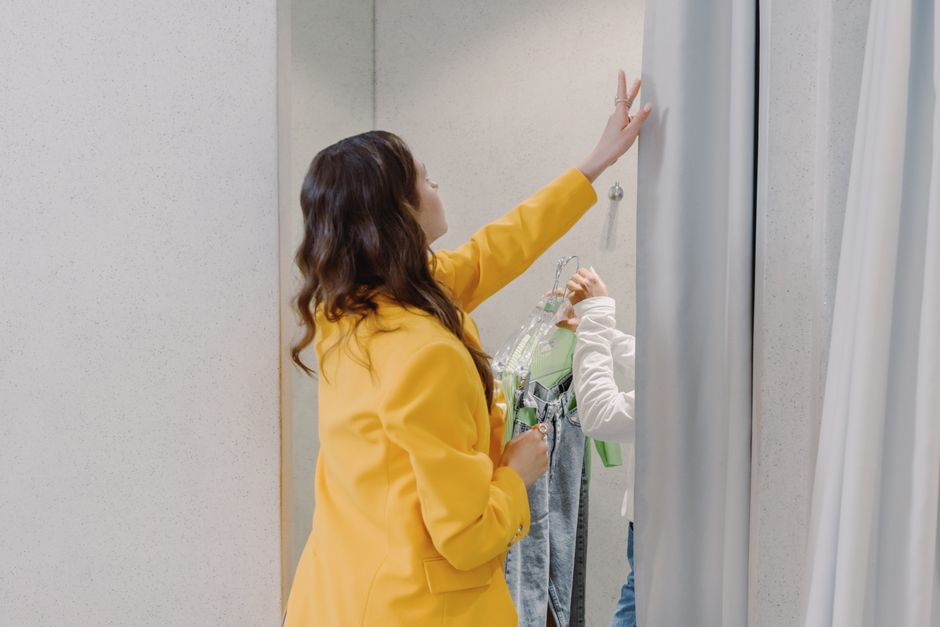
A jacket ending at the widest part of the hip can make the body look cut in half. Choose a cropped jacket that finishes near the natural waist, or a longer layer that falls below the hip. The awkward middle length is the one I avoid. A single-breasted blazer with two buttons also gives a cleaner line than a boxy three-button style.
Keep shoulder padding modest. A shoulder that extends more than 1–2 cm beyond your natural shoulder adds width without adding height. Roll or push the sleeves to expose the wrist, but do not bunch them into a thick stack.
Use dresses with controlled volume
A column dress, a soft wrap dress or a fit-and-flare shape with a narrow skirt usually works better than a huge tiered dress. The hem should either sit above the knee or fall close to the ankle; midi hems that stop at the widest part of the calf are harder to balance. If you love a midi dress, show the instep with a low-cut shoe and keep the dress colour unbroken.
For petite women, the winner is a dress with one dominant line and limited decoration. Ruffles, giant pockets and wide belts all compete for space.
A five-step mirror check for better petite outfits
Use this check before altering clothes or buying another “petite” piece. It takes less than a minute and catches most proportion problems.
- Check the shoulder seam. It should sit at your shoulder bone, not halfway down your arm. Oversized shoulders are one of the quickest ways to lose shape.
- Find the visual waist. Look at the point where the top ends and the bottom begins. Move that point up or down until your legs appear longer without squeezing your torso.
- Inspect the trouser break. Walk three steps. If the fabric folds twice above the shoe, the trousers need shortening or a slimmer hem.
- Count the strong lines. A belt, contrasting hem, ankle strap and cropped jacket may each look fine alone. Together, they can create too many breaks. Remove one.
- Take one phone photo. Mirror views can flatter because you are used to them. A straight-on photo shows whether the coat, trouser and shoe colours form one continuous path.
This process beats guessing from a model who is 5 feet 10 inches tall. Petite styling is a fit problem first and a trend problem second.
Petite fashion questions that save money at the fitting room
Should petite ladies avoid oversized clothes?
No, but oversized needs one controlled area. Pair a roomy sweater with a slim skirt, or wide trousers with a fitted knit. Oversized top, oversized bottom and large shoes can swallow a shorter frame. The best version keeps one boundary visible, usually the wrist, ankle or waist.
Are maxi skirts and wide-leg trousers a mistake?
No. The mistake is buying them too long and letting the fabric puddle. A maxi skirt should skim the top of the foot, while wide-leg trousers should nearly meet the floor when you wear the shoes intended for them. A vertical seam or pressed crease helps the fabric fall straight. The Uniqlo Smart Ankle Trousers show why a defined ankle length works: the hem stops on purpose instead of drifting between cropped and full length.
Do petite women need high heels?
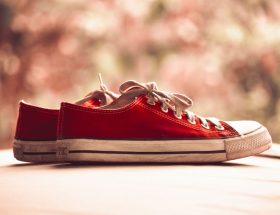
Not at all. Pointed toes, low-cut vamps and shoes close to the trouser colour create length without discomfort. The Converse Chuck Taylor All Star Lift Ox adds roughly a 1.5-inch platform, but it works best with a straight hem rather than a very cropped trouser. My verdict is simple: buy the shoe that keeps your stride natural. A tall heel that makes you shuffle ruins the whole outfit.
Three petite style myths I would stop believing
Myth one: every petite woman needs petite-labelled clothing
Petite ranges often shorten the sleeve, rise and overall length, but they do not guarantee a good shape. A petite label cannot fix a shoulder that is too wide or a trouser cut that does not suit your hips. Check the actual measurements and alter a well-cut standard garment when needed.
Myth two: small prints are always better
Tiny prints can look busy, while a medium vertical stripe may look cleaner. Scale the print to your frame, then check the background colour. A dark background with a narrow stripe usually creates more length than a scattered high-contrast pattern.
My verdict on the “wear heels” rule
Ignore it. The most useful fashion tips for petite ladies are precise hems, fewer horizontal breaks and a clear colour path from waist to shoe. If you want a dressier lift, the Sam Edelman Hazel pump has a roughly 3.75-inch heel, but a pointed 1-inch heel is easier to wear and often looks more polished in real life. Spend money on alterations before chasing height. A £15 hem can improve a £40 pair of trousers more than another trend purchase ever will.