Date-Night Outfits That Stay Warm: Warm Date-Night Outfits That Work After Dark
The best warm date-night outfit has three jobs: trap heat, block wind, and still look intentional when you sit down for dinner. Start with a thin thermal layer, add one polished texture such as wool or leather, then finish with a real coat and shoes that can handle cold pavement. A bare ankle, flimsy jacket, or beautiful shoe with a smooth sole can wreck the whole plan.
My strongest formula is simple: a fitted thermal top, a soft sweater or sharp blazer, straight-leg trousers or a midi skirt, opaque tights, and a long coat. It looks dressed up without forcing you to shiver outside the restaurant. The outfit should feel good from the first walk to the last rideshare pickup.
What makes a date-night outfit warm after dark?
Start with heat retention, not bulk
Warmth comes from managing air and moisture. A close-fitting base layer holds a thin layer of warm air against your skin. A middle layer adds insulation. The outer layer blocks wind and light rain. Put those three jobs in the right order and you can stay warm without wearing a giant sweatshirt under a formal coat.
Use a smooth base layer under anything tailored. It is about 2.25 times warmer than regular HEATTECH, according to the brand. The useful part is not the marketing phrase. It is the thin fit, which lets a shirt, dress, or blazer sit cleanly on top.
Protect the gaps people forget
Most cold-weather outfits fail at the neck, wrists, ankles, and feet. A deep neckline looks elegant indoors but lets heat escape quickly outside. Choose a high-neck knit, a silk scarf tucked under the coat, or a narrow cashmere scarf. For skirts and dresses, wear opaque tights of at least 80 denier. Add socks that reach above the boot line so cold air cannot slip between your shoe and hem.
Warmth also depends on fit. A thermal layer that is painfully tight creates discomfort and can leave you sweating indoors. A coat that is too narrow across the shoulders crushes the insulating layer beneath it. Leave enough room for one substantial middle layer. That is the difference between a coat that works and a coat that only photographs well.
Choose materials that match the forecast
Wool and cashmere are excellent for dry, cold evenings. Fleece-lined tights and synthetic thermals perform better when you expect damp weather or heavy walking. Leather shoes block wind better than fabric sneakers, but they still need a grippy sole. If the forecast includes rain, suede is a poor choice and a smooth leather Chelsea boot is the smarter move.
The verdict is clear: build warmth from the inside out. A thin thermal top and protected feet do more for comfort than adding a second bulky sweater.
How should you dress for a cold evening date?
Use this five-step outfit test
- Check the real temperature. Look at the temperature after sunset, wind speed, and chance of rain. A calm 45°F evening feels very different from a windy 45°F walk beside the water.
- Plan the longest outdoor stretch. Dress for the 20-minute walk, train platform, outdoor table, or line outside the venue. The heated dining room is not the hard part.
- Pick one fitted base layer. Use a thermal crew neck under a sweater, a thermal high neck under a dress, or fleece tights under a skirt. Do not stack several thick tops that bunch at the waist.
- Add one visible warm texture. Choose merino, cashmere, brushed wool, leather, corduroy, or a quilted coat. Texture makes practical clothing look deliberate.
- Test the whole outfit while seated. Sit in the trousers, cross your legs in the skirt, and lift your arms inside the coat. If the hem rides up or the sleeve pulls, fix it before the date.
The best balance is one warm layer per job
Do not ask one garment to do everything. A sweater keeps your core warm but does little against wind. A puffer blocks cold but can look oversized at a restaurant. Tights cover your legs but do not replace a coat. Assign each layer a role, then keep the visible silhouette clean.
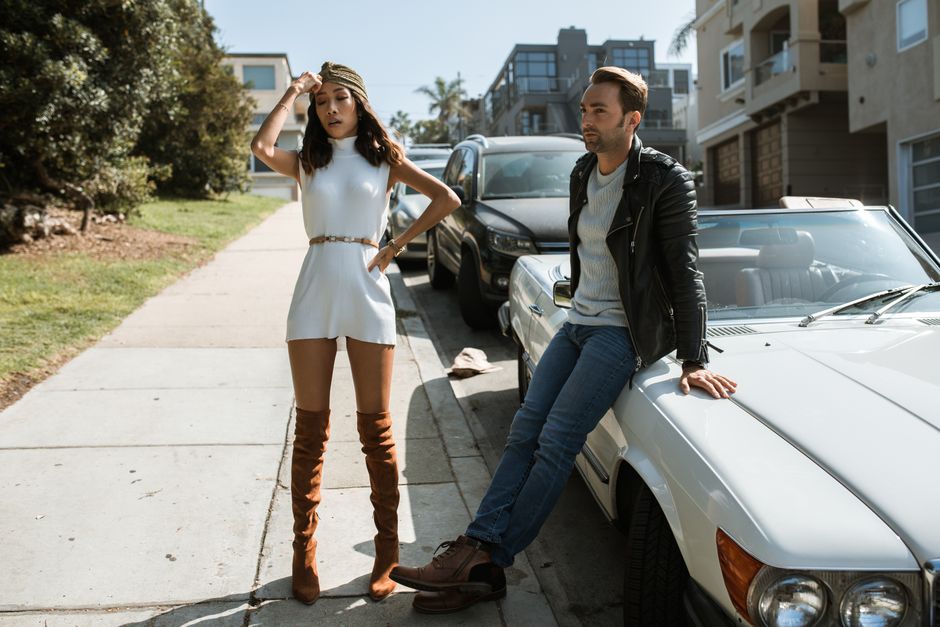
For a polished look, use a dark base with one lighter texture: black trousers, a charcoal merino sweater, and a camel coat. For a softer outfit, try a burgundy knit dress, black opaque tights, and a chocolate-brown leather boot. Both combinations look styled because the colors are controlled, not because they rely on fragile accessories.
When to choose a dress, trousers, or skirt
Choose trousers when you will walk more than ten minutes or face strong wind. Choose a skirt when you can wear fleece-lined tights and a long coat that covers the upper thigh. Choose a dress when the shape is simple enough to layer under a coat without pulling at the shoulders. A slip dress with bare legs is not a winter outfit; it is an indoor outfit with a coat temporarily placed over it.
Which pieces are actually worth buying?
Buy the coat and footwear first. They control comfort more than a special-occasion blouse ever will. A stylish dress cannot rescue cold feet or a coat that lets wind through the zipper.
Best base layer: Uniqlo HEATTECH Ultra Warm
The high-neck version works under a sweater or dress, and the fabric stays thin enough for tailored layers. It is the best choice for anyone who wants one inexpensive piece that can support several outfits.
Best coat for serious cold: Aritzia The Super Puff
Choose the Aritzia Super Puff when warmth outranks a sleek silhouette. It is not the best choice for a formal venue with a coat check because the volume can overwhelm a delicate dress. For a restaurant date in mild cold, a wool coat looks sharper. For a winter lights walk, the Super Puff wins.
Best footwear by weather
It is the clear pick for wet sidewalks and long walks. For a polished indoor date, a low block-heel leather boot looks dressier than either option. The verdict: Blundstone for weather, UGG for casual comfort, and a sleek leather boot for a short walk to dinner.
What should you wear if the forecast keeps changing?
What is the safest outfit for 35°F to 45°F?
Wear a HEATTECH or merino base layer, a fine-gauge sweater, straight trousers, wool socks, and a knee-length coat. Add a scarf that fits under the collar. This combination handles a cold walk but can be adjusted indoors by removing the scarf and coat. It is the best default for dinner, drinks, or a movie.
What works for rain and wind?
Choose synthetic thermal layers, a water-resistant coat, and leather or treated boots with a rubber sole. Replace suede with smooth leather. A puffer is useful when the wind is sharp, while a wool coat works only if the forecast stays mostly dry. Keep a compact umbrella in the bag, but do not rely on it to replace a coat with a proper hood or high collar.
What is the final outfit formula?
For a date that starts after dark, wear a fitted thermal top, a fine merino or cashmere layer, straight-leg trousers or a lined midi dress, opaque tights when needed, and a long coat. Choose boots with traction and add one visible detail such as a bright scarf, gold earrings, or a textured bag. The result looks like an outfit, not emergency winter gear.
That is the solution to the cold sidewalk problem: dress for the weather you will actually experience, then keep the polish in the texture, shape, and accessories. You arrive warm, sit down comfortably, and never have to pretend that shivering is part of the date-night look.