Work Outfit Vogue: A Sharp Office Formula
The best work outfit Vogue look is not the loudest one. It is a clean combination of one strong shape, one useful layer, and shoes you can actually walk in. My most reliable formula is a relaxed wool blazer, a fine knit or crisp shirt, straight-leg trousers, and a structured loafer. It looks polished at a desk, credible in a meeting, and still works after the commute.
What makes a work outfit look Vogue-ready?
Start with shape, not decoration
Vogue-inspired office dressing starts with proportion. A slightly roomy jacket over a narrow trouser creates a clear line without looking stiff. A wide-leg trouser needs a shorter jacket or a tucked top so the outfit does not become one large block of fabric. The goal is tension between pieces, not perfect matching.
I prefer a blazer that ends around the hip bone, with sleeves finishing at the wrist and enough room to button over a thin sweater. A jacket that pulls across the chest looks cheap, even when it costs $500. A jacket that hangs two sizes too large can look borrowed. Fit does more work than a designer label.
Use one visible point of interest
Choose one detail that gives the outfit personality: a sculptural earring, a deep burgundy shoe, a narrow silk scarf, or a belt with a simple metal buckle. Keep the rest quiet. The COS Double-Faced Wool Blazer, often priced around $250, works well because its clean lapels and minimal hardware leave room for a stronger shoe or bag. For a lower-cost version, the Uniqlo Tailored Jacket at roughly $80 gives a similar straight shoulder line, though its fabric looks more casual up close.
My verdict is simple: spend your styling energy on silhouette first, then add one memorable detail.
How should you match an outfit to the office dress code?
Read the room before choosing the clothes
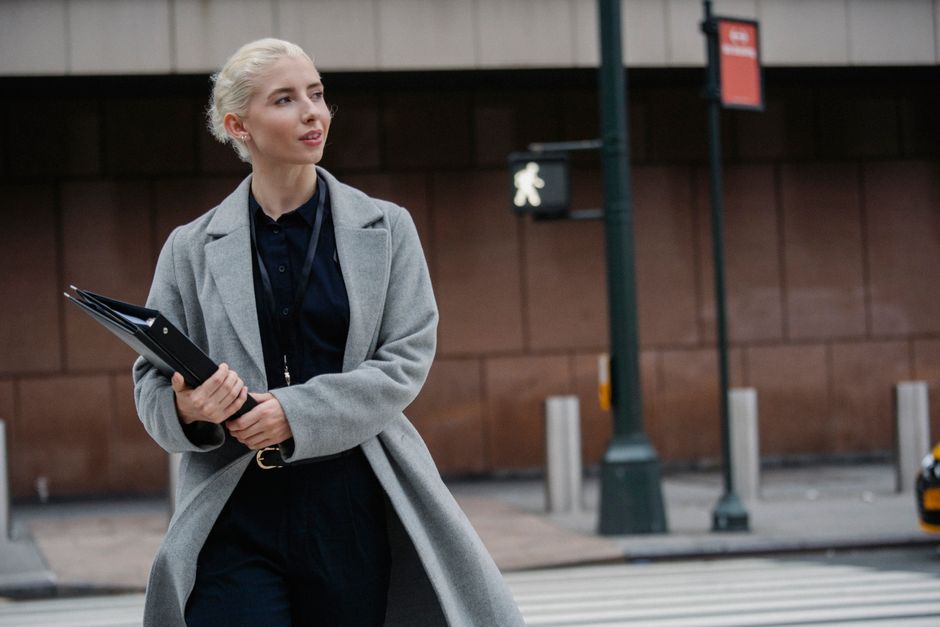
The same work outfit can look sharp in a creative studio and badly underdressed in a formal finance office. Start by studying what senior people wear on ordinary days, not only what appears at a client event. Notice the level of tailoring, shoe coverage, hem lengths, and color range. A dress code often hides in those small details.
| Office setting | Reliable base | Risk to avoid |
|---|---|---|
| Formal corporate | Dark blazer, pressed trousers, closed-toe shoes | Thin jersey, bright trainers, exposed midriff |
| Business casual | Fine knit, tailored trousers, loafers | Wrinkled linen, beach sandals, distressed denim |
| Creative workplace | Simple tailoring with one unusual color or texture | Too many statement pieces at once |
| Hybrid office | Layered separates that look finished on camera | Slouchy top with visibly casual bottoms |
Build a safe first-day outfit
For a new workplace, wear navy, charcoal, cream, black, or muted brown. Pick one tailored item, one soft item, and one polished accessory. This combination gives you room to adjust after you learn the local standard. A full suit can feel too formal, while jeans and a sweatshirt may feel careless.
The strongest first-day choice is a charcoal trouser, cream knit, black belt, and black loafer under a navy blazer. It is restrained, but it does not disappear.
Which three-piece formula works on rushed mornings?
The jacket, base, and trouser system
My strongest recommendation is the three-piece formula: structured jacket, simple base layer, straight trouser. It removes most morning decisions while leaving enough room for personal style. Wear a blazer over a white poplin shirt and black trousers on a presentation day. Swap the shirt for a merino crew neck and the trousers for dark denim on a casual Friday. The architecture stays intact.
The M.M.LaFleur Jardigan, usually about $295, is useful for offices where a traditional blazer feels too rigid. It has the visual effect of a jacket but wears more like knitwear. The Theory Good Wool blazer, often listed near $495, gives a cleaner shoulder and sharper drape for formal meetings. I would buy the Theory jacket for frequent presentations and the M.M.LaFleur layer for a long commute or a relaxed workplace.
Make the formula work across one week
- Monday: navy blazer, white shirt, charcoal trousers, black loafers.
- Tuesday: camel blazer, black knit, dark straight-leg jeans, leather belt.
- Wednesday: grey cardigan jacket, pale blue shirt, navy trousers, low pumps.
- Thursday: black blazer, striped knit, cream trousers, burgundy flats.
- Friday: collarless jacket, fine T-shirt, dark denim, clean leather sneakers.
Repeat the jacket twice, but change the base layer and shoe. That creates variety without filling your wardrobe with weak purchases.
Which shoes and bags keep office outfits polished?
Choose footwear by walking distance
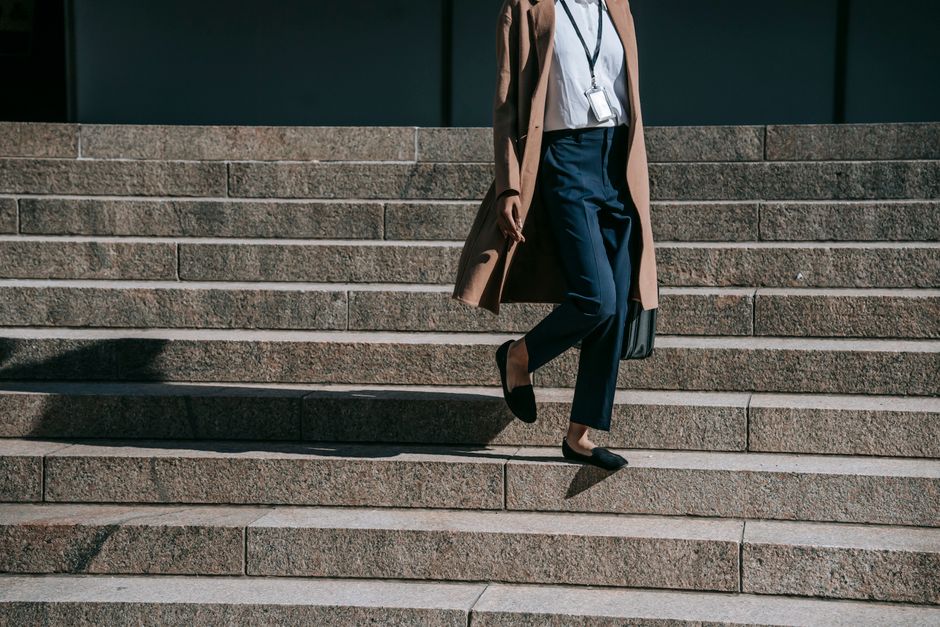
Shoes decide if a work outfit feels practical or theatrical. For a long commute, the Sam Edelman Loraine loafer, around $140, is a dependable choice because the low heel and covered toe suit most office settings. For a sharper formal look, a 45mm block-heel pump gives height without the unstable feeling of a thin stiletto. The Everlane Day Glove flat, often around $145, works best when you need a soft shoe for travel, but its flexible shape looks less formal than a loafer.
| Shoe type | Best use | Tradeoff |
|---|---|---|
| Leather loafer | Daily office, commuting, trousers | Can feel heavy with delicate dresses |
| 45mm block heel | Presentations and formal meetings | Less comfortable after several hours |
| Pointed flat | Skirts, cropped trousers, travel days | Can pinch wide feet |
| Minimal leather sneaker | Creative or relaxed offices | Never reads as formal tailoring |
Match the bag to the job
A structured tote makes the most sense when you carry a laptop, notebook, charger, and lunch. Look for a zipped top, reinforced handles, and a base that stays upright. A tiny shoulder bag may look elegant, but it forces you to carry essential work items in a second plastic or canvas bag. That breaks the outfit faster than a modest tote would.
My winner for a polished daily uniform is a black leather loafer with a medium structured tote. The pair looks intentional and survives real working days.
Which colors make workwear look expensive?
The quiet palette wins
Use navy, espresso, stone, charcoal, ivory, and black as the main colors, then add one accent such as oxblood, cobalt, olive, or soft pink; this palette looks expensive because the eye reads the outfit as deliberate, and the colors sit well beside common office materials such as wood, glass, denim, and grey carpet. Keep high-contrast combinations for one clean break, such as a cream shirt with espresso trousers, rather than mixing four strong shades in one outfit.
Texture matters more than brightness
A matte wool blazer beside a smooth cotton shirt looks richer than two shiny polyester pieces, while a ribbed knit can soften sharp tailoring without making it sloppy; avoid matching every texture because the outfit needs small changes in surface to create depth, and choose warm metal jewelry with brown shoes or cool metal with black and navy accessories for a quieter finish.
My clear color verdict
For the most dependable Vogue-inspired work outfit, choose navy, ivory, and espresso, then use burgundy as the accent. It is more distinctive than a black-and-white uniform but still safe for serious meetings.
What work outfit mistakes make clothes look cheaper?
Fix the details people notice first
- Wrong trouser length: Full-length trousers should skim the top of the shoe, while cropped trousers should show a deliberate ankle gap. A random break looks like an alteration mistake.
- Overstuffed pockets: Phones, keys, and card holders pull fabric out of shape. Use a small pouch or work bag instead.
- Thin office knits: Lightweight fabric can cling, show underwear lines, and lose shape by lunchtime. Choose a denser knit with recovery.
- Too much matching: Matching the blazer, trousers, shoes, and bag in one exact color can look like a uniform without intention. Change the texture or value of one piece.
- Unfinished hems: Loose threads, long sleeves, and trousers dragging on wet pavement damage the whole impression.
Know when to replace, not rescue
Do not keep styling a blazer that collapses at the shoulders or trousers that wrinkle after ten minutes of sitting. Accessories cannot repair bad structure. Replace the weakest item first, usually the jacket or trouser, then rebuild around it.
The biggest mistake is buying a dramatic piece before owning a dependable base. A quiet jacket that fits correctly will earn more wears than an exciting jacket that works with one outfit.
What Vogue-inspired outfit works for each office?
Q: What should I wear to a formal office?
A: Wear a single-breasted navy blazer, ivory shirt, charcoal trousers, and black leather loafers or a modest block heel. Keep jewelry small and choose a structured black tote. This is the best formula for interviews, client meetings, and workplaces where presentation matters more than personal experimentation.
Q: What works in a creative office?
A: Keep the tailoring, but change the texture or accent. Try a chocolate-brown blazer over a black ribbed top, wide-leg cream trousers, and a burgundy flat. A Veja Campo sneaker, commonly priced around $175, can work in a relaxed creative office, but do not pair it with visibly wrinkled or oversized clothing; the rest of the outfit needs clean lines.
Q: What should I wear when I work from home and have video calls?
A: Build the outfit from the camera outward. Wear a clear neckline, a jacket with defined shoulders, and earrings or a watch that gives the frame some detail. Keep the lower half comfortable, but make sure the top layer can move from a call to an unexpected errand. My verdict: the best work outfit Vogue formula is a navy blazer, fine knit, straight trousers, and practical loafers because it looks composed without requiring constant adjustment.