Best Yonex Tennis Shoes for Performance and On-Court Style 2026
A raw egg dropped from a height of seven meters onto a sheet of Yonex Power Cushion material will bounce back four meters without breaking. This laboratory demonstration, frequently cited by the Japanese manufacturer, serves as the foundational data point for their entire footwear philosophy. While many competitors rely on generic EVA (ethylene-vinyl acetate) foam or air-based units, Yonex has spent decades refining a proprietary shock-absorption system that prioritizes energy return over simple cushioning. For the modern tennis player, this translates to a reduction in muscle fatigue and a measurable increase in propulsion during lateral transitions. Choosing the best Yonex tennis shoes requires an understanding of how this technology integrates with different chassis designs to serve specific player profiles.
The Science Behind Yonex Power Cushion Technology and Shock Absorption
The core differentiator in Yonex footwear is the transition from Power Cushion to Power Cushion+. Laboratory testing indicates that Power Cushion+ offers 28% more shock absorption and 62% more repulsion than standard original Power Cushion formulas. This is achieved by adding a special elastic resin to the original material, creating a lattice structure that compresses under impact and snaps back to its original shape with minimal energy loss. In a sport like tennis, where a player may perform over 500 explosive lateral movements in a single three-set match, the cumulative effect of this energy return is significant. It reduces the load on the patellar tendon and the ankles, which are the primary failure points for frequent players.
Beyond the foam itself, Yonex utilizes a concept called the Power Graphite Drive. This is a carbon plate inserted into the midfoot section of the shoe. Its primary function is to prevent bridge torsion—the twisting of the shoe’s arch—while simultaneously acting as a springboard. When a player loads their weight onto the midfoot during a split-step or a sprint, the graphite plate stores potential energy. As the foot leaves the ground, the plate returns to its neutral state, providing a mechanical advantage in acceleration. This integration of chemical (foam) and mechanical (graphite) energy systems defines the high-performance nature of the brand’s top-tier models.
Key Technical Specifications of Power Cushion+
- Impact Absorption: Converts kinetic energy from landing into power for the next movement.
- Repulsion: 62% increase in bounce compared to traditional urethane foams.
- Weight: 1/10th the weight of conventional silicone-based cushioning systems.
- Durability: Maintains structural integrity longer than standard EVA, which tends to bottom out after 40-50 hours of high-intensity play.
Yonex Eclipsion 5 vs Fusionrev 5: Choosing Stability or Comfort
The Yonex lineup is segmented into distinct silos, with the Eclipsion and Fusionrev representing the pinnacle of their engineering. The Eclipsion 5 is the flagship stability shoe, favored by professional athletes like Hubert Hurkacz. It is designed for the aggressive baseliner who slides on hard courts and requires maximum lockdown. The design features a reinforced upper called Durable Skin, which is a thick, flexible plastic wrap that prevents the foot from spilling over the edge of the midsole during hard lateral stops. In contrast, the Fusionrev 5 focuses on a glove-like fit. It utilizes a unique asymmetrical lacing system and a “bootie” construction that eliminates the traditional tongue, reducing pressure points on the dorsal aspect of the foot.
| Feature | Yonex Power Cushion Eclipsion 5 | Yonex Power Cushion Fusionrev 5 |
|---|---|---|
| Primary Focus | Stability and Support | Fit and Comfort |
| Upper Material | Durable Skin (Rigid) | Double Raschel Mesh (Flexible) |
| Weight (Men’s 9) | Approx. 14.1 oz | Approx. 13.2 oz |
| Best For | Aggressive Baseliners | All-Court Players |
| Approx. Price | $160.00 | $145.00 |
Performance Trade-offs in the Flagship Models
The Eclipsion 5 offers superior lateral security but carries a weight penalty. Players who prioritize a light, airy feel may find the Eclipsion’s upper somewhat restrictive or “plasticky” during the initial break-in period. The Fusionrev 5, while lighter and more comfortable out of the box, lacks the extreme rigid support found in the Eclipsion’s heel stabilizer. For players with a history of ankle rolls, the Eclipsion is the objectively safer choice. For those who value a natural foot movement and a seamless feel, the Fusionrev’s TPU (Thermoplastic Polyurethane) shank provides sufficient stability without the bulk of the Eclipsion’s heavy-duty chassis.
Top Lightweight Yonex Tennis Shoes for Speed and Agility
For players who view speed as their primary weapon, the Yonex Power Cushion Sonicage 3 is the most relevant option in the catalog. While the Eclipsion and Fusionrev are engineered for the rigors of the professional tour, the Sonicage is designed for the club player who needs to move quickly without the fatigue associated with heavier footwear. Weighing in at approximately 10.9 ounces for a men’s size 9, it is one of the lightest performance shoes on the market. The weight reduction is achieved by using a thinner Power Graphite plate and a more generous application of Double Raschel Mesh in the upper. This mesh is an ultra-fine material that is eight times more breathable than standard mesh, facilitating superior moisture management during summer matches.
The Sonicage 3 is often overlooked because of its lower price point, but for a recreational player, the reduced weight often results in better late-match performance than a heavy stability shoe.
The compromise with the Sonicage 3 is found in its longevity. To achieve its light weight, Yonex uses a softer rubber compound in the outsole. While this provides excellent grip, it wears down faster on abrasive hard court surfaces than the heavy-duty Endurance Rubber found on the Eclipsion. Furthermore, the Sonicage lacks the extensive TPU wrap found on the higher-end models, meaning the upper may stretch over time, leading to a slight loss in lateral lockdown after several months of use. However, at a price point of approximately $110, the value proposition remains high for players who prioritize agility over tank-like durability.
Sonicage 3 At a Glance
- Pro: Exceptional weight-to-cushioning ratio; requires zero break-in time.
- Con: Outsole durability is lower than the Eclipsion or Fusionrev series.
- Ideal User: Junior players, club competitors, and those who avoid heavy, stiff shoes.
Best Yonex Tennis Shoes for Clay Courts and Multi-Surface Play
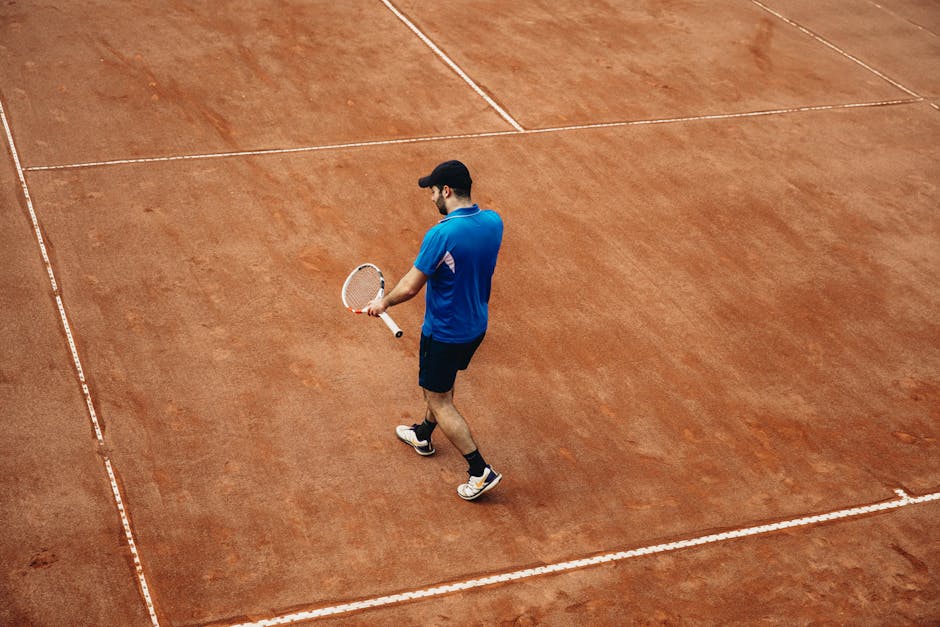
Traction on clay is fundamentally different from traction on hard courts. On a hard court, the shoe must grip the surface; on clay, the shoe must allow for a controlled slide. Yonex addresses this by offering specific “Clay” versions of their main models, featuring a full herringbone tread pattern. This deep, zig-zag groove design prevents clay from clogging the outsole, ensuring that the player can still find purchase when changing direction. The Yonex Eclipsion 5 Clay is widely considered one of the best clay-court shoes in existence because its rigid lateral wall provides the necessary support to stop a slide precisely.
For players who split their time between different surfaces, the “All-Court” versions of Yonex shoes utilize a modified outsole. This hybrid pattern features a denser tread in high-wear areas (like the medial forefoot) and wider grooves on the lateral edge to facilitate some sliding. It is important to note that using a clay-specific shoe on a hard court will result in extremely rapid tread wear and may cause the player to “stick” to the court, increasing the risk of injury. Conversely, using an all-court shoe on dry, slick clay can lead to unpredictable slipping. If a player spends more than 30% of their time on clay, investing in a dedicated clay-specific model like the Fusionrev 5 Clay is a data-backed recommendation for both performance and safety.
Outsole Material Technology
Yonex utilizes Endurance Rubber II, a high-density compound designed to withstand the friction heat generated during high-speed slides. In the Eclipsion 5, this rubber is molded into a one-piece outsole that increases the contact area with the ground. This design improves stability but can feel stiff. The Fusionrev 5 uses a semi-one-piece outsole with a slight gap in the midfoot, which allows for more independent movement between the heel and forefoot, aiding in a smoother heel-to-toe transition during the running gait.
Durability Analysis: How Long Do Yonex Outsoles Last?
Durability in tennis footwear is measured in two ways: outsole wear and upper integrity. Yonex shoes generally perform well in upper integrity due to their use of Durable Skin Light, a polyurethane-based material that resists abrasion from toe dragging. For players who drag their toes during serves or backhands, the Eclipsion 5 offers the most protection, with a thick rubber wrap that extends over the medial side of the toe box. This is a critical feature, as many lightweight shoes will develop a hole in the mesh upper within weeks if the player has a pronounced toe drag.
Regarding the outsole, the life expectancy of a Yonex shoe depends heavily on the surface and the player’s movement style. On average, a competitive player can expect 40 to 60 hours of play from the Eclipsion 5 before the tread wears smooth in high-impact zones. The Fusionrev 5 typically offers 35 to 50 hours. While Yonex does not currently offer a six-month outsole durability guarantee on all models in all regions—a policy common with brands like Adidas or Asics—their Endurance Rubber II is competitively durable. It is a dense, non-marking compound that maintains its grip levels even as the tread depth decreases.
Factors Affecting Footwear Longevity
- Court Grit: Newly surfaced hard courts are more abrasive and will strip rubber faster than older, smoother courts.
- Player Weight: Heavier players exert more force on the outsole, accelerating the compression of the midsole and the wear of the rubber.
- Movement Patterns: Players who slide on hard courts will see significantly faster wear on the lateral edges of the outsole.
- Storage: Leaving shoes in a hot car can degrade the adhesives and the Power Cushion foam, leading to premature delamination.
Sizing and Width Considerations for Yonex Tennis Footwear

One of the most common issues players face when switching to Yonex is the specific Japanese-influenced fit, which tends to be slightly shorter and narrower in the midfoot than American brands like New Balance or K-Swiss. However, Yonex is one of the few performance brands to offer dedicated wide models. The Yonex Power Cushion Sonicage 3 Wide (often designated as 4E) is specifically built on a wider last to accommodate players who find standard tennis shoes too restrictive. For those with a standard D-width foot, the regular models provide a very secure, locked-in feel that prevents internal foot sliding—a major cause of black toenails and blisters.
The toe box shape in Yonex shoes follows a “Toe Assist Shape” philosophy. This design reduces pressure on the big toe while offering improved support at the midfoot and heel. By centering the weight over the big toe, Yonex claims to improve the efficiency of the push-off phase. When sizing, it is often recommended to go up a half-size if you are between sizes, especially in the Eclipsion line, as the rigid upper materials do not stretch significantly over time. A thumb’s width of space between the end of the toe and the front of the shoe is the standard recommendation to allow for foot expansion during long matches in the heat.
Fit Guide by Model
- Eclipsion 5: Snug, narrow-to-medium fit. High arch support. Rigid feel.
- Fusionrev 5: Medium fit. The bootie construction accommodates various instep heights.
- Sonicage 3: Slightly more generous standard fit. Available in 4E Wide versions for high-volume feet.
- Lacing Tip: Use the extra eyelet (the runner’s loop) on the Eclipsion 5 to maximize heel lockdown and prevent slippage during vertical jumps.
In the final assessment, the Eclipsion 5 remains the objective choice for maximum protection and stability, while the Fusionrev 5 offers a superior blend of comfort and modern aesthetics. For the budget-conscious or speed-oriented player, the Sonicage 3 provides the best entry point into the Yonex ecosystem. Each model utilizes the same foundational Power Cushion technology, ensuring that regardless of the specific chassis, the player benefits from the brand’s unique approach to impact protection and energy return.