Puffer Jackets Under $2000 That Actually Keep You Warm
Think you need to spend thousands to stay warm? Wrong. Most people overspend on puffers, chasing brand names that offer diminishing returns. The truth is, you can get a seriously high-performing jacket for under $2000. Don’t let marketing hype tell you otherwise.
Don’t Overpay: Why Most $2000+ Puffers Are a Rip-Off
Let’s be blunt: a puffer jacket costing north of $2000 is often a luxury item, not a necessity for warmth. You’re paying for a badge, not necessarily superior insulation. Brands like Moncler or even some high-end Canada Goose models cross this threshold, and while they’re well-made, the thermal performance jump from a $500 jacket to a $2000 one is rarely proportional to the price difference.
The Luxury Trap: What You’re Really Paying For
When a jacket costs more than your monthly rent, it’s usually due to brand prestige, limited-edition designs, or exotic materials that don’t always translate to better warmth-to-weight ratios. The core technology—down fill or synthetic insulation—is often quite similar across a wide range of price points. A $2500 jacket might use 900-fill power goose down, but so might a $700 Arc’teryx jacket. The marginal gains in warmth or durability at the extreme high end are tiny compared to the massive price hike. It’s about status, not survival.
Understanding Diminishing Returns in Insulation
Beyond a certain point, more expensive doesn’t mean significantly warmer. A well-constructed puffer with 700-800 fill power down and a quality shell will keep you toasty in most conditions. Pushing to 900 fill power is great, but it primarily shaves off weight and bulk, not necessarily adds a massive amount of warmth that justifies a quadruple price tag. The real value is in that sweet spot where performance meets sensible cost, usually well below the $1000 mark for top-tier gear, and definitely under $2000.
What to Look For: Down Fill, Water Resistance, and Shell Fabric

Forget the price tag for a second. These are the elements that actually matter for warmth and durability. If a jacket gets these wrong, it doesn’t matter how much it costs.
Fill Power: More Isn’t Always Necessary, But It Helps
Fill power measures down’s loftiness and its ability to trap air. Higher fill power (e.g., 800-900) means more warmth for less weight and bulk. Lower fill power (e.g., 550-650) means you need more down to achieve the same warmth, making the jacket heavier and bulkier. For serious cold, aim for 700 fill power or higher. Below 600, it becomes a casual jacket, not a true cold-weather performer. Synthetic insulation uses different metrics, but look for reputable brands’ proprietary tech like PrimaLoft or Omni-Heat for reliable warmth.
Shell Fabric and Water Resistance: Your First Line of Defense
A puffer’s shell fabric is crucial. It needs to be durable enough to resist tears and tough enough to repel light precipitation. Look for DWR (Durable Water Repellent) finishes. While most puffers aren’t fully waterproof (that’s what a hardshell is for), a good DWR treatment will bead water off, preventing the down from getting wet and losing its loft. When down gets wet, it becomes useless. Some jackets use Gore-Tex or similar membranes, offering true waterproofing, but these often come at a premium and can reduce breathability. For most winter conditions, a strong DWR is sufficient. Pay attention to the fabric denier – higher numbers (e.g., 30D, 40D) mean more durability; lower numbers (e.g., 10D, 15D) mean lighter weight but less toughness.
Construction Matters: Baffles and Cold Spots
How the down is held in place impacts warmth. Box-baffle construction creates individual compartments, preventing down migration and eliminating cold spots. Stitch-through construction, where the outer and inner fabric are stitched directly together, is lighter and cheaper but creates seams where cold air can penetrate. For extreme cold, box-baffle is superior. Also, check for features like adjustable hoods, internal draft collars, and elasticized cuffs – these small details seal in warmth.
The Absolute Best Value Puffer Right Now
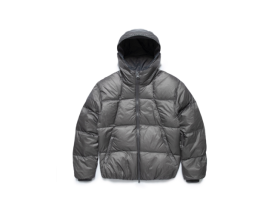
If you need warmth, don’t overthink it. The Arc’teryx Thorium Hoody is the smartest buy under $2000. Period.
Common Mistakes When Buying a High-End Puffer

People make the same errors repeatedly. Avoid these if you want a jacket that actually performs.
-
Ignoring Fill Power and Type: Focusing solely on brand or exterior look without checking the insulation specs is a rookie mistake. 600-fill power down won’t cut it in serious cold, no matter the brand.
-
Overlooking Shell Durability: A super lightweight shell (sub-15D) is great for packing, but it tears easily. If you’re using this jacket for anything more than walking from your car to the office, you need a tougher fabric. A torn puffer is a useless puffer.
-
Assuming Waterproofing: Most puffers are water-resistant, not waterproof. Wearing a down jacket in a downpour is asking for trouble. If you need full waterproofing, you need a different type of outer layer or a very specific, expensive waterproof down parka.
-
Buying the Wrong Fit: Too tight, and you restrict movement and insulation. Too loose, and you create air gaps that let cold in. Try it on with your typical layering underneath. It should allow movement without feeling baggy.
-
Neglecting Features: Adjustable hood? Cinchable hem? Internal pockets? These aren’t just bells and whistles; they contribute to overall warmth and functionality. A hood that doesn’t seal around your face is letting heat escape.
-
Not Considering Climate: A lightweight puffer for a mild winter is different from a serious parka for arctic blasts. Match the jacket’s intended use to your actual climate. Don’t buy a mountaineering expedition jacket for city living, and don’t expect a casual puffer to protect you in sub-zero temperatures.
Top Puffer Jackets Under $2000: A Quick Look
Here are some of the best performing, reliable options that won’t break the bank. These are proven performers, not just pretty faces.
| Jacket Model | Insulation Type & Fill Power | Shell Fabric | Key Features | Approx. Price (USD) |
|---|---|---|---|---|
| Arc’teryx Thorium Hoody | 750-fill European grey goose down + Coreloft synthetic | Arato 30 nylon with DWR | Down Composite Mapping, adjustable hood, two zippered hand pockets | $400 – $550 |
| Patagonia Down Sweater Hoody | 800-fill Traceable Down | NetPlus 100% postconsumer recycled nylon ripstop with DWR | Adjustable hood, two handwarmer pockets, internal chest pocket, packs into its own pocket | $280 – $350 |
| The North Face Men’s 1996 Retro Nuptse Jacket | 700-fill goose down | 100% recycled nylon ripstop with DWR | Stowable hood, VISLON center front zip, internal zip pocket, bungee cinch hem | $320 – $380 |
| Eddie Bauer Superior Down Parka | 650-fill Responsible Down Standard (RDS) down | Polyester with DWR | Detachable faux fur hood trim, multiple pockets, storm cuffs | $250 – $350 |
| Columbia Men’s Omni-Heat Infinity Summit Double Wall Down Hooded Jacket | 800-fill Responsible Down Standard (RDS) down + Omni-Heat Infinity lining | 100% nylon with DWR | Advanced thermal reflective lining, double wall construction, adjustable hood | $300 – $400 |
These models consistently deliver. You’re getting excellent warmth, decent durability, and smart designs without the ridiculous price tag.
Your Puffer Jacket Questions, Answered

How often should I wash my down jacket?
Don’t wash it too often. Down jackets don’t need frequent washing; once or twice a season is usually enough, unless it’s visibly dirty. Over-washing can degrade the down’s loft and the shell’s DWR finish. When you do wash it, use a down-specific cleaner and tumble dry on low heat with dryer balls to restore loft.
Can I really wear a puffer jacket in the rain?
Generally, no. Most puffers are designed for cold, dry conditions. While they have a DWR coating to shed light snow or drizzle, prolonged exposure to rain will soak the down, causing it to clump and lose its insulating properties. If you anticipate heavy rain, wear a waterproof hardshell over your puffer. Some specialty waterproof down parkas exist, but they are heavy and expensive.
What does ‘fill power’ actually mean for warmth?
Fill power directly relates to the warmth-to-weight ratio. A higher fill power number (e.g., 800) means a given weight of down takes up more space and traps more air, providing more warmth for less material. Conversely, lower fill power (e.g., 600) means you need more down by weight to achieve the same warmth, making the jacket heavier and bulkier. It’s a measure of quality, not quantity. You can have a very warm jacket with 600 fill power, but it will be heavier than an equally warm 800 fill power jacket.
The Best Brands for Value and Performance
Forget the fashion brands. If you want actual warmth and durability for your money, stick to the outdoor specialists. They build gear for real-world conditions, not just runways.
-
Arc’teryx: Consistently excellent. Their gear is meticulously designed and built to last. The Thorium series offers superb warmth and fit without hitting the extreme price points of their expedition parkas. You get premium performance and construction.
-
Patagonia: A solid choice for eco-conscious buyers who don’t compromise on performance. Their down is traceable, and their designs are classic and functional. The Down Sweater is an industry benchmark for a reason.
-
The North Face: While they have high-fashion collaborations, their core mountaineering and outdoor line remains top-notch. The Nuptse is an icon for a reason: incredible warmth and durability for the price. Just make sure you’re getting the genuine article, not a knock-off.
-
Eddie Bauer: Seriously underrated. They’ve been doing down for decades. Their Superior Down Parka, for instance, offers immense warmth for a fraction of the cost of some competitors. It’s a workhorse for cold climates.
-
Columbia: Good entry-to-mid-range options, especially with their Omni-Heat reflective technology. You can find solid value here, particularly if you’re not pushing into extreme expedition conditions. Their attention to trapping body heat is notable.
Synthetic vs. Down: Pick Your Poison (Wisely)
This isn’t a simple choice. Both have their place. Don’t blindly pick one without understanding the trade-offs.
When Down Wins: Superior Warmth-to-Weight
Down is king for warmth-to-weight ratio. Period. If you need maximum warmth for minimum bulk and weight, especially in dry, cold conditions, down is your go-to. It compresses incredibly well, making it ideal for packing. High-fill power down is unmatched in its ability to trap air and provide insulation. However, down’s major weakness is moisture; once it gets wet, it loses its loft and becomes useless. It’s also harder to clean and often more expensive initially.
When Synthetic Shines: Wet Weather Resilience
Synthetic insulation, like PrimaLoft or Coreloft, doesn’t offer the same warmth-to-weight as down. It’s bulkier and heavier for the same warmth. But here’s where it wins: it performs when wet. If you’re in a damp, cold climate, or anticipate rain or heavy snow, synthetic insulation maintains much of its insulating properties even when saturated. It’s also hypoallergenic, easier to care for, and generally cheaper. For active pursuits where you might sweat, synthetic can also manage moisture better. Many high-quality puffers, like the Arc’teryx Thorium, use a smart hybrid approach: down in the main body where warmth is critical, and synthetic in areas prone to moisture, like the hood and cuffs.