Korean Men’s Casual Style: The Outfit Formula That Works
Open any Seoul street style account and you will notice it immediately. The outfits look effortless in a way that is hard to replicate. Nothing is flashy. Nothing announces itself. But everything fits together with a precision that makes a typical casual wardrobe feel like a series of accidents by comparison.
The gap is not money or access to rare pieces. Most of what Korean men wear casually is globally available at reasonable prices. The gap is understanding the underlying system — proportions, color logic, and the specific silhouettes that define the aesthetic. Once that system is clear, the rest follows.
What Separates Korean Casual Style from Generic Streetwear
The short answer: restraint and proportion.
Korean men’s casual style draws from multiple traditions — Japanese minimalism, European workwear, American sportswear — but synthesizes them in a specific way. The unifying principle is that nothing in the outfit competes for attention. Every piece either leads or supports. There is almost always one clear focal point, usually silhouette or footwear, and everything else functions as a clean backdrop.
This is structurally different from the most common version of Western casual dressing. In mainstream streetwear, the goal is often layering multiple statement pieces simultaneously — graphic tee, bold sneakers, oversized jacket, chunky accessories, all at once. Korean casual style picks one statement and builds everything else to support it.
The Proportion Rule
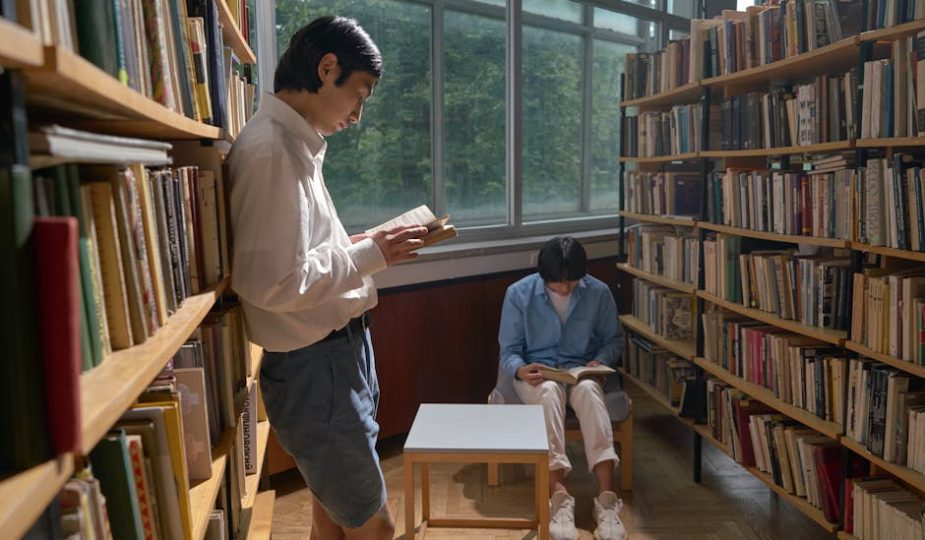
The most consistent silhouette in Korean men’s casual wear follows one straightforward logic: one loose element, one fitted element. Wide-leg trousers with a tucked slim-fit tee. An oversized jacket over straight-cut pants. A relaxed crewneck with tapered chinos.
When both top and bottom are oversized simultaneously, the result looks unintentional. When both are slim-fit, it reads as dated. The contrast between fitted and relaxed is what creates the visual balance that makes these outfits look purposeful rather than thrown together. This single rule eliminates more outfit failures than any other piece of styling advice.
What Clean Actually Means Here
Korean casual style obsesses over subtraction. Unnecessary hardware, visible logos, busy prints — these get edited out. The result is visual quiet that reads as sophisticated without trying to look expensive.
This is why a plain $40 Musinsa Standard tee in the right silhouette can look more intentional than a $200 graphic tee fighting for attention. When branding and graphics are absent, texture becomes the primary source of visual interest: lightweight cotton-linen blends, brushed fleece, raw-hem denim, nylon ripstop. The fabric does the work that logos do in louder aesthetics.
The Core Wardrobe Pieces and How They Stack Up
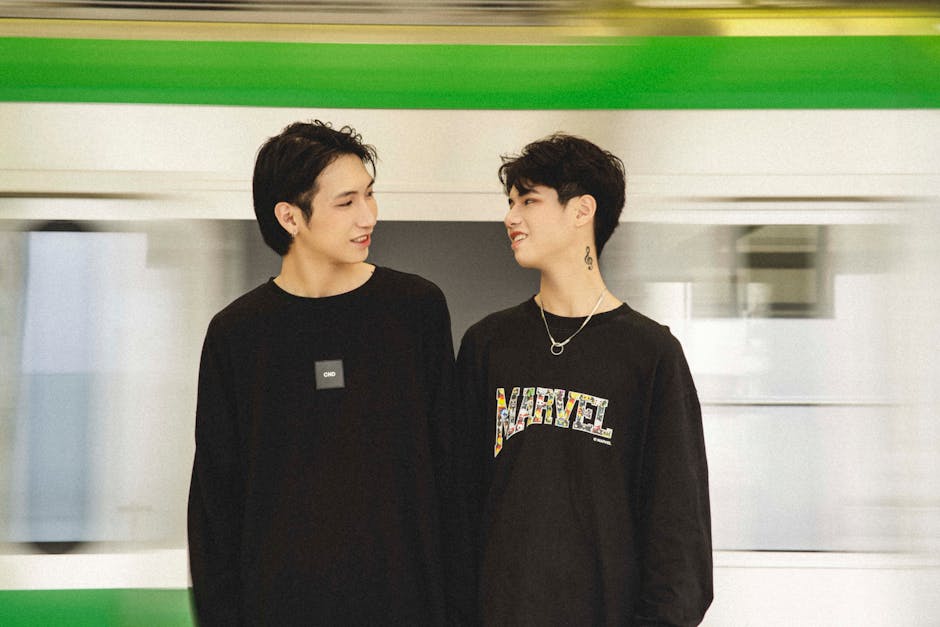
These are the building blocks. Every outfit in Korean men’s casual style uses some combination of these five categories. The table below covers function, budget option, and mid-tier option for each.
| Piece | Role in Outfit | Budget ($30–80) | Mid-Tier ($80–200) |
|---|---|---|---|
| Wide-leg or straight-cut trousers | Primary silhouette anchor | Musinsa Standard wide chino (~$45) | Andersson Bell relaxed trousers (~$130) |
| Oversized crewneck or heavyweight tee | Top layer, shape and texture | Covernat cotton crewneck (~$55) | NOHANT graphic sweatshirt (~$110) |
| Retro runner sneakers | Finishing element, often the statement | Adidas Samba (~$100) or NB 574 (~$80) | New Balance 992 (~$185) or Asics Gel-Kayano 14 (~$120) |
| Outer layer (jacket or cardigan) | Proportion adjustment, weather layer | Carhartt WIP Detroit Jacket (~$130) | ADER Error oversized bomber (~$220+) |
| Cargo or utility pants | Casual-functional trouser alternative | Uniqlo wide cargo (~$40) | Covernat nylon cargo (~$95) |
The sneaker choice carries more weight than almost any other single piece. Korean casual style heavily favors retro runners and classic silhouettes over current hype releases. The New Balance 992, Asics Gel-Kayano 14, and New Balance 2002R appear consistently throughout Seoul street style photography. These shoes work across multiple color palettes and avoid the trend-chasing energy of limited-edition drops. The Adidas Samba at $100 is the most accessible entry point — low-profile, neutral, and compatible with almost any neutral-based outfit in this aesthetic.
Priority order for building the wardrobe from scratch: trousers first, then sneakers, then a quality crewneck. An outer layer comes after those three are solid. Most people buy in the wrong order and end up with statement pieces that have nothing to anchor them.
Fit Is the Only Variable That Cannot Be Fixed With Money
Buy the wrong size and no brand name or fabric quality saves the outfit. Korean casual style is built on intentional proportions — wide where it should be wide, tapered where it should taper — and that only works if the fit is deliberate. Most Korean brands run one size smaller than US and EU standard sizing. When ordering from Musinsa Standard, Covernat, or ADER Error online, size down from your usual or read the specific size chart carefully. An oversized silhouette that is meant to read as relaxed-intentional becomes shapeless if you miscalculate by even a single size.
The Color System Behind Most Korean Casual Outfits
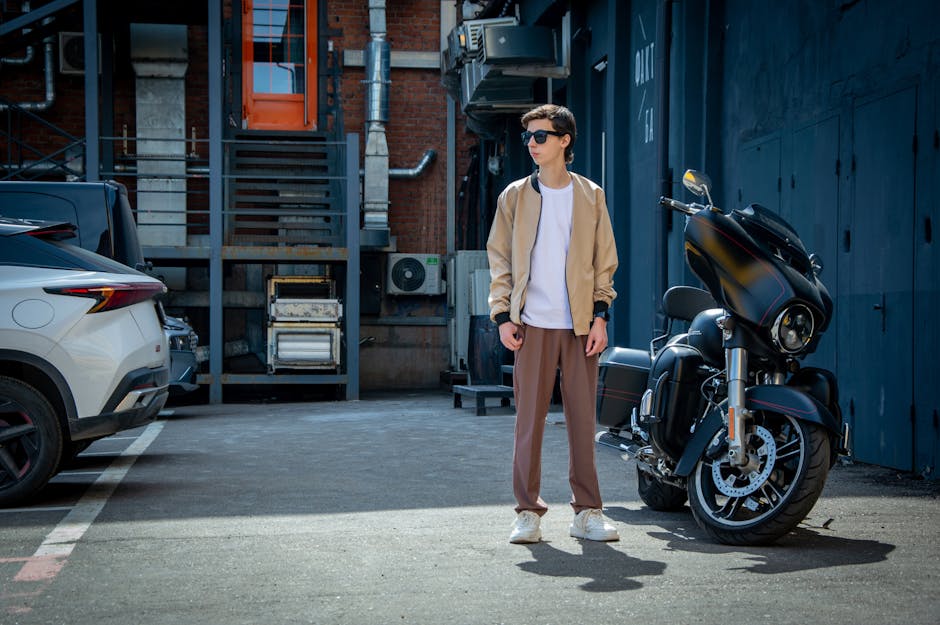
Korean casual style is not monochrome, but it operates inside a disciplined color logic. Most outfits work within three colors or fewer, organized around one of these structures:
- All-neutral base with one earthy accent: black trousers, white tee, sand-colored jacket. The most reliable structure. Nearly impossible to execute badly.
- Tonal dressing: different values of the same color family — light gray crewneck, mid-gray cargo pants, charcoal jacket. Depth comes from value contrast, not hue contrast.
- Dark base with one muted accent: navy, black, or dark olive as the foundation, one piece in dusty rose, sage green, or washed burgundy. The accent is intentionally desaturated, not bright.
- Earth tones only: camel, tan, brown, olive, rust. This palette photographs exceptionally well and requires almost no active styling effort once you learn which shades harmonize.
What Korean casual style consistently avoids: primary colors in loud combinations, matching two-piece sets in bright solids, and the deliberate-clash aesthetic that some streetwear labels market as sophisticated. Dissonance is not the point here.
The most practical starting foundation is black, white, and grey as the core. Add one earth-tone piece — a camel coat, olive cargo pant, tan bomber — and the palette expands naturally without losing coherence. From there, tonal additions are always safer than introducing an entirely new color family. A second earth tone harmonizes more reliably than a new accent at the wrong saturation level.
Korean Brands Worth Buying — With Honest Price Context
Musinsa Standard is the best entry point for most people building this wardrobe. It is the house label of Musinsa, South Korea’s dominant fashion e-commerce platform, and it functions the way Uniqlo does in Japan — affordable, well-proportioned basics designed specifically for the Korean market. Wide-leg trousers run $40–50. Quality is noticeably above fast fashion. If budget is a constraint, start here before buying anything with brand recognition attached to it.
Covernat
Mid-price Seoul streetwear brand with a workwear-influenced aesthetic. Known for heavyweight cotton construction and durable build quality. A standard crewneck runs $50–70. Their nylon cargo pants ($90–95) are one of the strongest individual pieces at this price point — the right proportion, functional pocket placement, and a neutral olive or black colorway that integrates with almost anything. Available through Musinsa’s international shipping. A better choice than buying Carhartt WIP at Western retail markup if you want comparable weight and construction with a more Korean aesthetic sensibility.
ADER Error
The brand most people picture when Korean fashion comes up. Conceptual, slightly avant-garde in proportion and graphic language, but genuinely wearable in practice. Most pieces run $150–300+. Their oversized bombers and graphic knitwear are the most internationally referenced pieces. Not a starting point unless you already have a clear vision. The better approach: buy one ADER Error statement piece and build around it with neutrals from Musinsa Standard or Uniqlo. One expensive anchor outperforms a closet of directionless mid-tier pieces.
NOHANT
Less visible outside Korea but worth attention. Clean, text-based graphics on quality cotton. Sweatshirts and tees in the $80–120 range. The graphic language leans intellectual — restrained color use, vintage references, readable without being loud. A useful middle ground between Covernat’s workwear direction and ADER Error’s conceptual approach, and a solid choice for buyers who want something distinctive but not immediately recognizable to non-Korean fashion audiences.
International Brands That Integrate Naturally
You do not need exclusively Korean labels. Carhartt WIP, New Balance, and Stüssy work alongside Korean casual pieces without tonal conflict. The Adidas Samba ($100) and New Balance 992 ($185) appear most consistently in Seoul street style documentation — both currently available at retail without hype markup. At a higher price point, Stone Island and C.P. Company appear regularly in Korean men’s casual outerwear, offering technical construction with restrained branding that fits the clean aesthetic cleanly.
Five Mistakes That Kill the Look Before It Starts
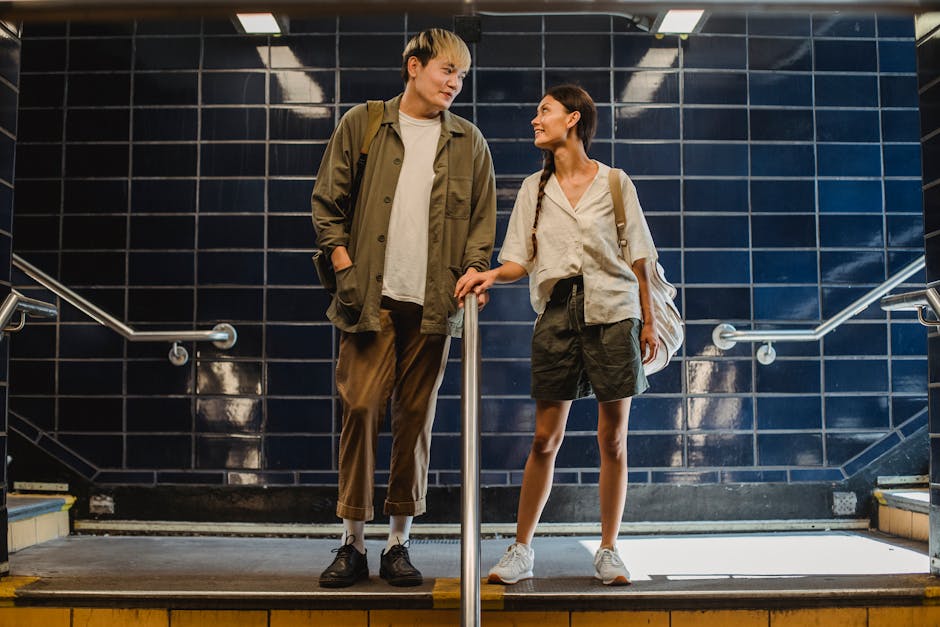
- Both layers loose at the same time. Wide top plus wide bottom collapses into shapelessness. Always create contrast: a relaxed bottom needs a tucked or fitted top. An oversized top needs straight or tapered pants. The proportion rule is not optional — it is the structural logic the entire aesthetic depends on.
- Over-accessorizing. Korean casual style uses accessories deliberately and sparingly. A clean watch or a single minimal ring. Not layered chains, bucket hat, sunglasses, and crossbody bag all in the same outfit. Each accessory should be justifiable as the only one present. When in doubt, remove something rather than add it.
- Wrong sneaker energy. Current hype releases — limited Jordan collabs, heavily branded designer sneakers — fight against the restrained tone of Korean casual. They pull attention in the wrong direction. Retro runners and classic silhouettes finish the outfit. Hype drops compete with it and lose every time.
- Ignoring seasonal fabric weight. Korean dressing is highly season-aware. Lightweight cotton-linen in summer. Heavyweight fleece and nylon in fall and winter. Wearing a summer-weight crewneck in October because the silhouette is correct reads as careless regardless of how right everything else is. Fabric weight is part of the outfit’s intention, not an afterthought.
- Copying lookbook outfits wholesale without adapting them. A full ADER Error look that works on a 22-year-old in Hongdae reads differently on different body types, ages, and daily contexts. The principles — proportion, restraint, color logic — are universal. The exact outfit is not. Apply the system and adapt the output to your actual life, not the lookbook’s.
When Korean Casual Style Is Not the Right Choice
This aesthetic has real limits, and understanding them prevents expensive wardrobe mistakes.
If your daily environment is formal or business-casual, the wide-leg silhouettes and relaxed outerwear of Korean casual will not translate. For contexts that require visible structure, a Japanese workwear approach — Engineered Garments, Monitaly — offers similar color restraint and quality focus in more architecturally deliberate silhouettes. Same underlying values, different application.
If you are above the size range most Korean brands accommodate — typically US L or XL at maximum — ordering online becomes unreliable. Build the aesthetic using Western brands with appropriate sizing instead: Uniqlo’s relaxed-fit trousers, Our Legacy’s wide-cut jeans (Cut Two, around $270), or Todd Snyder’s relaxed chinos. The proportions and color logic translate regardless of label.
And if the core of this style — restraint, neutral palettes, subtractive editing — does not match what you want to express, this is simply not the right aesthetic. Korean casual rewards patience and visual discipline. It does not reward maximalism or deliberate loudness. Recognizing that early is more useful than buying the pieces and finding out later.
Back to those Seoul street style images that looked so effortless. The reason they look effortless is that the person wearing the outfit understands the rules well enough to stop consciously applying them. The proportions are right. The colors work without effort. The sneakers finish rather than compete. That level of coherence comes from understanding the system — not from copying any individual outfit. Once you have the system, the rest is just shopping.