Best Coat Styles for Big Busts That Fit Well
A full bust needs room across the chest without turning the whole coat into a shapeless tent. The strongest choices use smart closures, clean shoulder lines, and enough bust ease for a sweater without adding bulk everywhere else.
Start With Bust Ease, Not the Size Label
The first buying decision is not small, medium, or large. It is the amount of space between your body and the coat at the fullest part of your bust. A coat that pulls across the buttons, rises at the front hem, or creates diagonal wrinkles from the chest needs more room, even if the shoulders fit perfectly.
Measure your bust while wearing the thickest top you plan to wear under the coat. Keep the tape level across your back and the fullest point of your chest. Then compare that number with the garment’s finished-bust measurement, not only the brand’s body-size chart. Unlike an insurance quote, a coat has no AM Best rating or J.D. Power score. The closest reliable evidence is a clear measurement chart, useful garment photos, and a return policy that lets you test the fit.
| How you plan to wear the coat | Useful bust ease | Fit result |
|---|---|---|
| Over a thin blouse | 2 to 3 inches | Neat, close shape with limited layering |
| Over a knit dress or light sweater | 3 to 5 inches | Comfortable everyday fit |
| Over a chunky jumper | 5 to 7 inches | Layering room without chest strain |
| Heavy winter layering | 7 inches or more | Warm but likely to look oversized |
Verdict: choose the smallest size that gives your bust the correct ease while keeping the shoulder seam near the edge of your shoulder. A loose shoulder can be altered more easily than a coat that lacks chest room.
The Fastest Verdict: Which Coat Shapes Work?

The most reliable shape for a large bust is a single-breasted coat with a defined shoulder, a little waist shaping, and an A-line or gently straight skirt. This combination gives the chest breathing room while letting the fabric fall away from the body instead of clinging across the stomach and hips.
Wrap coats rank first when you want adjustable fit, because the belt can sit below the fullest point and the overlapping front does not force buttons across the bust. A-line coats rank first for a polished office wardrobe, especially when princess seams create room without visible gathering. Open-front cocoon coats work well for casual outfits, but only when the shoulder line is controlled and the fabric has enough weight to hang cleanly.
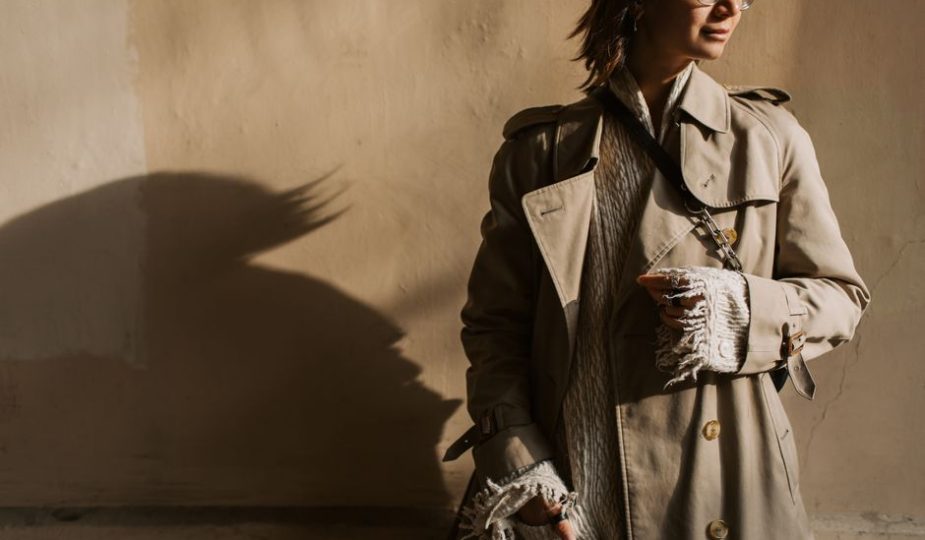
Single-breasted trench coats are the safest rainwear option. Peacoats and other double-breasted styles need more care because two rows of buttons often add width at the chest and can pull open during movement. Cropped boxy jackets are the weakest choice for most full-busted shoppers: their short hem ends near the bust or waist and makes the upper body look wider.
If one shape deserves the clearest recommendation, it is the belted wrap coat with a medium-weight fabric. It adapts to small changes in layering, creates a visible vertical line, and does not depend on a perfectly placed button.
Why Wrap and A-Line Coats Give Better Chest Room
Coat fit follows simple geometry. Your bust projects farther forward than your waist, so a straight tube of fabric must either become large everywhere or pull across the chest. Good coat design solves that problem by moving excess fabric to a seam, a pleat, a belt, or an open front. That is why shape matters more than the label on the tag.
Wrap fronts adjust around the fullest point
A wrap coat lets you set the overlap where your body needs it. Look for a belt that can pass through more than one loop, an inside button or tie for security, and a front edge that stays flat when you walk. The belt should sit at your natural waist or slightly below it, not directly across the fullest part of the bust. A belt placed too high can create a shelf effect and make the chest look larger.
The Universal Standard Geneva Coat is a useful example of the wrap principle: its open, belted front gives more adjustment than a fixed button row. The practical test is simple. Tie the coat over your usual knitwear, sit down, lift your arms, and check that the front remains closed without constant retightening.
Princess seams shape without squeezing
Princess seams run from the armhole or shoulder toward the hem. They can add room through the bust while keeping the waist and side panels controlled. This is usually more flattering than heavy darts placed directly over the chest, which can point attention toward the bust apex. Search for seams that pass smoothly over the bust and do not stop halfway down the front.
An A-line coat such as the Boden Sloane Coat shows the appeal of this proportion: the upper body can stay structured while the lower half widens slightly. Check the actual front measurement before buying because a narrow cut can still fail, even when the silhouette looks bust-friendly in a product photo.
Open fronts remove the button problem
An open-front cocoon coat avoids the familiar gap between buttons. The tradeoff is less wind protection and less control around the waist. Choose dense wool, a broad shawl collar, or a belt if you want the coat to look intentional rather than unfinished. The Universal Standard Cocoon Coat is the kind of style to inspect for this reason, but the shoulder width and sleeve length still matter more than the name of the silhouette.
Verdict: choose a wrap coat for the most adjustable fit, an A-line princess-seam coat for polished structure, and an open cocoon coat for relaxed outfits. Do not treat all three as interchangeable.
Five Fit Checks to Use in the Changing Room
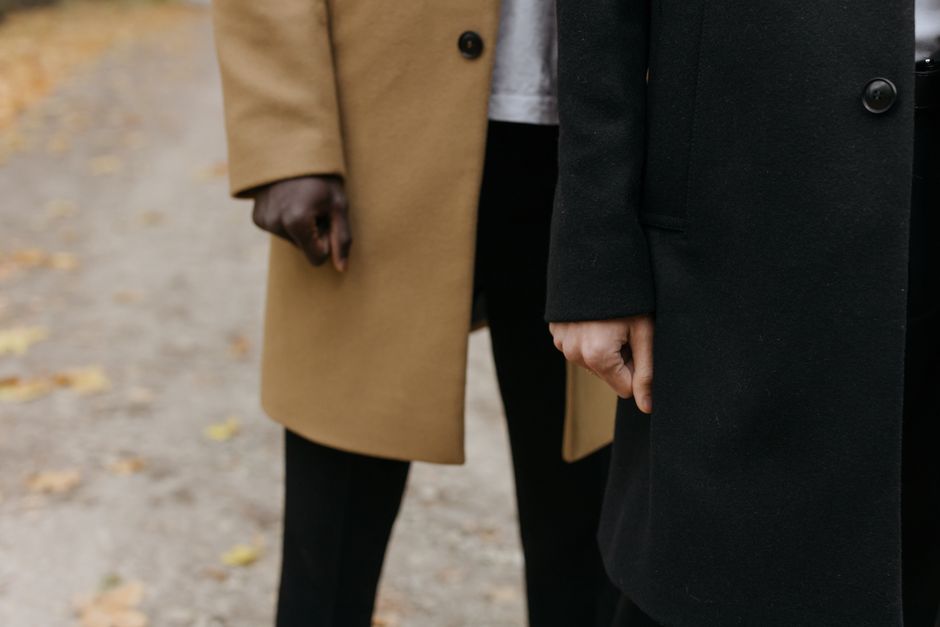
Use these checks in order. They reveal problems that a mirror often hides.
- Close the coat fully. Button, zip, or tie it over the layer you will actually wear. If the closure strains, gaps, or forms an X-shaped wrinkle, the coat needs more bust room. Do not rely on leaving one button open as a permanent fix.
- Raise both arms. Reach forward as if you are holding a steering wheel. The coat should move with you without pulling across the chest or lifting several inches at the back neck. Raglan sleeves often give more movement than a sharply set sleeve, but they can look less tailored.
- Check the shoulder seam. The seam should sit close to your shoulder edge. If it drops far down the arm, the size may be compensating for a narrow bust. A tailor can sometimes add a small bust gusset, but moving an entire shoulder is harder and more expensive.
- Look at the front hem. A hem that rises at the centre front usually signals insufficient bust ease. This is common with fitted single-breasted coats and is easy to miss when standing still. Walk, sit, and turn sideways before deciding.
- Inspect the collar and lapels. Lapels should lie flat from the neckline through the bust. A collar that flips up or a lapel that rolls outward means the front is under tension. On the Lands’ End Women’s Wool Peacoat, for example, check the double-breasted front carefully because the style needs enough overlap to stay closed.
Verdict: reject any coat that fails the closure or arm-raise test. Minor sleeve length can be altered; persistent chest strain cannot be styled away.
My Pick for Most Full-Bust Wardrobes
My top choice is a single-breasted A-line coat with princess seams and a two-way front closure. It gives the cleanest balance between chest room, waist definition, and practical coverage. The two-way zip or button-and-zip combination also lets you open the lower section while keeping the upper chest protected, which helps when sitting or climbing stairs.
For a more adjustable option, choose a medium-weight wrap coat. It is the better purchase if your weight or layering habits change during the year. A coat like the Universal Standard Geneva Coat earns attention because the belt can change the shape from relaxed to defined, but inspect the tie length and inside closure before purchasing. A short belt that barely overlaps will not hold the coat securely.
For a classic tailored look, the Lands’ End Women’s Wool Peacoat is a stronger candidate than a very narrow fashion peacoat because the wool structure can hold its shape. Still, double-breasted fronts need careful sizing. If the buttons sit directly over the bust and the overlap is shallow, the coat will pull no matter how attractive the fabric looks.
The Boden Sloane Coat is the better direction for shoppers who want a feminine line without a belt. Look for enough room at the upper back and armhole, then check the front hem for lift. No product name removes the need for a measurement check.
Final product verdict: pick the A-line, single-breasted style for the most dependable wardrobe workhorse; pick the Geneva-style wrap for maximum adjustment; skip the peacoat if its buttons pull when you move.
Questions That Decide the Right Style

Can a double-breasted coat work for a big bust?
Yes, but it needs a generous overlap, firm fabric, and buttons that sit outside the fullest part of the chest. A double-breasted coat works best when the lapels create a strong V and the waist is not tightly nipped. Avoid shallow fronts that gape after one layer. If you prefer a very neat fit, a single-breasted coat is the safer choice.
Are oversized coats flattering on a full bust?
They can be, but oversized must mean extra volume with deliberate proportion, not simply sizing up. Choose a cocoon or dropped-shoulder shape with a clean hem, then keep the rest of the outfit narrow. A coat that is wide at the bust, long in the sleeve, and bulky at the hip removes all structure. For a clearer silhouette, choose one oversized feature and keep the other measurements controlled.
Should the coat have a belt?
A belt is useful when it sits below the bust and can be adjusted. It is less useful when it cuts across the chest or forces the waist into a tight point. A belt also adds visual focus, so match it to the coat rather than choosing a high-contrast tie that makes the centre front look busy.
Is a tailored coat better than a relaxed coat?
Not automatically. Tailoring helps when seams create room in the right place. A relaxed coat wins when the fabric drapes well and the shoulders still fit. The strongest choice is the one that gives the bust space while keeping a visible line from shoulder to hem.
Verdict: judge the coat while moving, layered, and closed. A still photograph cannot show the tension that causes most fit failures.
Mistakes to Avoid and When to Choose Another Coat
The most common mistake is buying for the shoulders and hoping the chest will stretch. Woven coat fabric has limited give, and stretching the front can distort the lapels, strain the lining, and wear out the closure. The second mistake is sizing up without checking shoulder width. That often creates dropped seams, long sleeves, and a bulky back while the bust still feels tight because the cut itself is too straight.
- Skip high button placements that land directly across the fullest part of the bust.
- Be careful with stiff, shiny fabric that highlights every area under tension.
- Avoid very short hems ending at the bust or high hip if you want a lengthening effect.
- Do not assume a plus-size label means a full-bust cut. Brands grade patterns differently.
- Check lining stretch, sleeve circumference, and back pleats before judging the outer fabric.
Choose a different category when your main problem is weather rather than shape. The Barbour Beadnell Wax Jacket is a better direction for wet commutes because waxed cotton and a front zip handle rain differently from an unlined wool wrap coat. It will look more casual and may feel less flexible across the chest, so it is not a replacement for a polished office coat.
For severe cold, a longer insulated coat with a two-way zip can beat a fitted wool style. The Uniqlo Seamless Down Long Coat is the type of alternative to inspect for warmth and light weight, but down coats need enough fill space to loft. If the chest is compressed, the coat loses comfort and may lose some insulation. For formal dressing, choose a wool A-line coat instead of forcing a puffer into an outfit it was never designed to match.
Bottom line: for big busts, the winning coat is the one with measurable chest ease, stable shoulders, and a closure that stays flat while you move. Start with a wrap or single-breasted A-line shape, then use the changing-room tests to confirm the pattern works for your body.