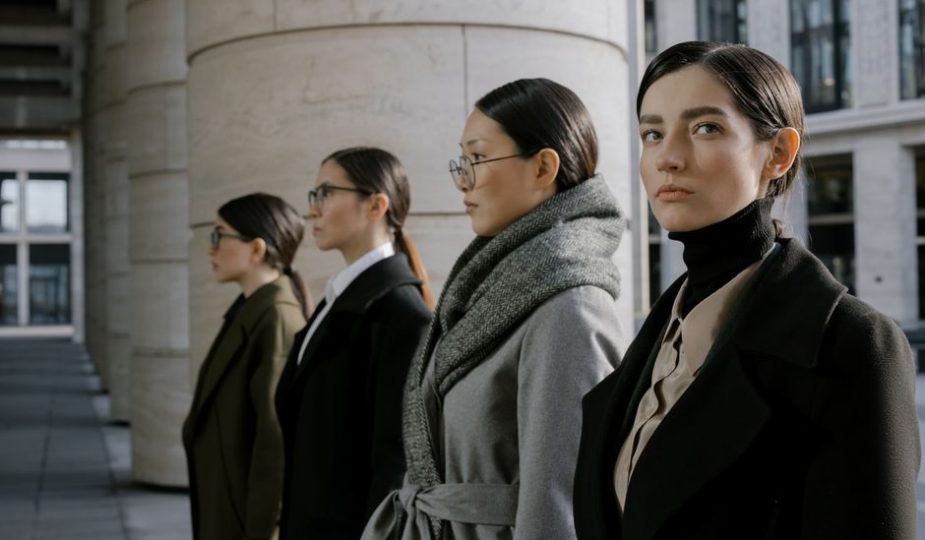
Interview Outfits for Women: 5 Polished Formulas That Work
What Makes an Interview Outfit Look Capable?
Fit matters more than formality. A $60 outfit that sits cleanly on your body will make a stronger first impression than a $400 suit with sleeves that swallow your hands or trousers that pull across the hips. The best interview outfit for women should look intentional, feel comfortable in a chair, and suit the workplace you are entering.
Read the room before choosing clothes
Start with the job, not your closet. A bank, law office, consulting firm, or corporate headquarters usually rewards a structured jacket, tailored trousers, and closed-toe shoes. A creative agency may welcome a sharper personal detail, such as a fine-gauge knit, a muted print, or a modern wide-leg trouser. A retail, hospitality, beauty, or startup interview often sits between polished and relaxed.
Search the company website and social pages for clues. Look at the people in team photos, but do not copy the most casual person in the room. Match the middle of the range. If the staff wears jeans and sneakers, dark trousers and loafers show respect for the meeting without making you look disconnected from the workplace.
Use the three-point fit test
Check three areas before you leave: shoulders, waist, and hem. A blazer shoulder should end close to your natural shoulder edge. The jacket should close without strain, even if you plan to wear it open. Trousers should skim rather than cling, and the hem should not bunch around the shoe.
Then sit down for five minutes. Raise both arms, cross your legs, walk up stairs, and reach for a bag. If the blouse gaps, the waistband digs in, or the shoe slips, the outfit has failed its real test. Interview clothes need to perform through travel, waiting, conversation, and a possible office tour.
My verdict: choose the cleanest outfit you can move in, then add one controlled detail such as a watch, textured belt, or simple earring. That balance looks prepared without looking over-styled.
Which Interview Outfit Formula Fits the Workplace?
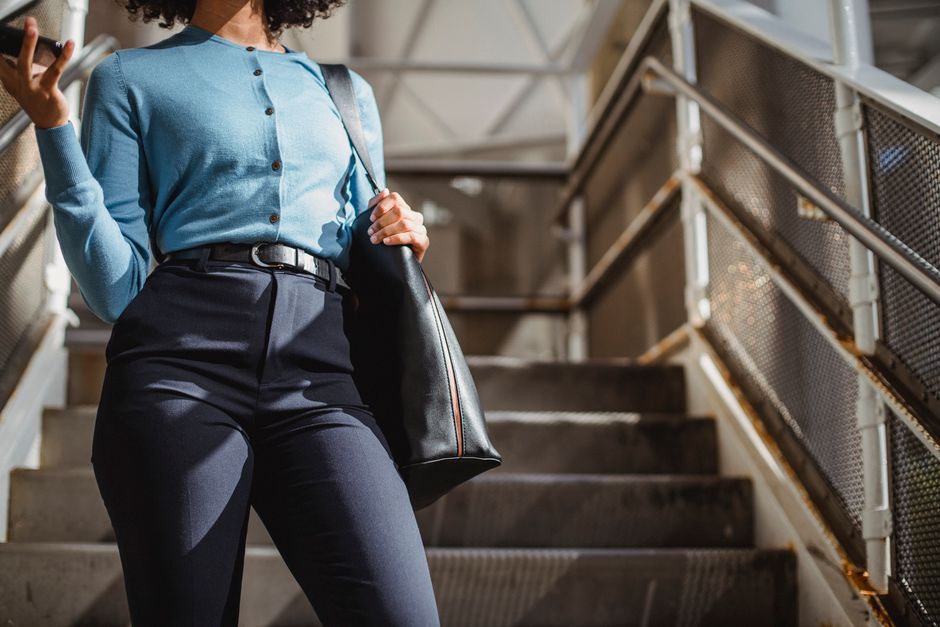
The safest choice changes with the employer’s dress code. A formal suit can look sharp at a financial firm and strangely stiff at a small design studio. The table below gives you a starting point. Treat it as a dress-code map, not a rulebook.
Compare the four most useful outfit levels
| Workplace signal | Best outfit formula | Color direction | Shoe choice |
|---|---|---|---|
| Formal corporate | Matching blazer and trousers, shell top, structured bag | Navy, charcoal, black, ivory | Low pump or polished loafer |
| Traditional business | Single blazer, straight trousers or knee-length skirt, blouse | Deep blue, camel, cream, burgundy | Loafer, slingback, or low heel |
| Business casual | Fine knit, pressed trousers, optional jacket | Chocolate, olive, soft blue, gray | Loafer, ballet flat, clean ankle boot |
| Creative or relaxed | Dark trouser, refined top, one modern accessory | Neutral base with one rich accent | Minimal leather flat or sleek sneaker |
Pick the safest color combination
For a first interview, navy with white, cream, pale blue, or soft gray is the strongest all-purpose combination. Navy feels less severe than a full black outfit and works under office lighting, video-call lighting, and outdoor photography. Charcoal offers the same restraint with a slightly more serious edge.
Black is not wrong, but a head-to-toe black outfit can look flat on camera and severe in a small office. Break it with an ivory blouse, a silver watch, or a textured jacket. Brown, burgundy, and olive work well as accents, but avoid building the entire outfit around a strong trend color unless the company clearly welcomes expressive dressing.
My verdict: for an unknown workplace, wear navy or charcoal on the bottom, a light neutral near your face, and one structured layer. That formula gives you room to adjust without buying a new wardrobe.
How Do You Prepare an Outfit That Survives the Interview Day?
Most outfit problems appear before the interview begins. A long commute, rain, a hot train platform, or a rushed walk from the parking lot can undo a carefully planned look. Follow this short preparation system.
Complete these checks the night before
- Try on the full outfit. Put on the jacket, blouse, trousers, shoes, undergarments, jewelry, and coat together. A blouse that looks fine alone may sit awkwardly beneath a fitted jacket.
- Check the fabric under light. Stand near a window and a bright lamp. Thin white tops can become transparent, and some black fabrics collect lint that only appears in strong light.
- Steam every visible surface. Focus on the collar, sleeve fronts, trouser crease, and area around the waist. Small wrinkles near the face attract more attention than wrinkles near the lower leg.
- Pack a repair kit. Bring a lint roller, stain-removal wipe, blister patches, safety pins, and a spare pair of tights if you wear them. Keep these items in your work bag rather than loose in a pocket.
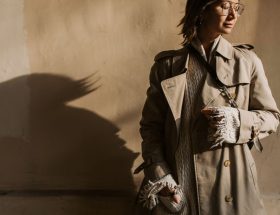
- Choose the travel layer. Your coat should cover the jacket instead of crushing it. A simple wool coat or clean trench looks more professional than a bulky sports parka when you arrive.
Run the movement and camera test
Record a thirty-second video from the waist up. Check the neckline, jacket lapel, shine, and the way the fabric moves when you speak. Video interviews magnify bright white, tiny stripes, noisy jewelry, and high-contrast prints. A matte medium-blue or muted gray top usually looks calmer on screen.
For an in-person meeting, walk for ten minutes in the shoes. If you feel pressure under the toes, buy a different pair or switch to a lower heel. You should never sacrifice a steady walk for an extra inch of height. Keep the outfit you wear to the interview separate from experimental styling. The meeting is not the place to discover that a wrap blouse opens when you bend or that a new heel rubs your ankle.
My verdict: prepare the outfit as equipment. Test it, repair it, and pack for the route you will actually take.
Which Women’s Interview Pieces Are Worth Buying?
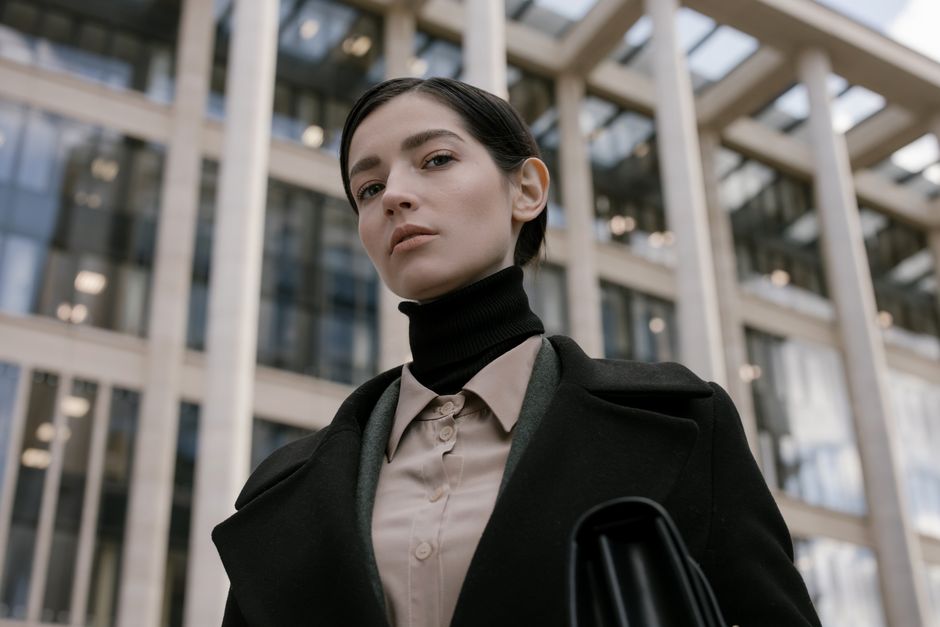
If you need to buy something, start with pieces that can work after the interview. A jacket worn only once is a poor purchase. The best additions also suit presentations, office days, networking events, and dinners where you want to look pulled together.
What is the best low-cost starting point?
The Uniqlo Women’s Jersey Relaxed Jacket, usually priced around $79.90, is the best budget entry point for a softer business-casual interview. Its stretch jersey construction feels easier than a stiff woven blazer, and the relaxed shape works over a blouse or fine knit. Choose black, navy, or gray rather than a seasonal shade. It is not the right choice for a very formal law or finance interview, but it is strong for retail, education, media, and many office roles.
Pair it with the Quince Washable Stretch Silk Blouse, commonly listed near $59.90. The washable silk gives a more refined surface than a basic polyester shirt, while the stretch helps prevent pulling across the bust. Ivory, navy, and pale blue are the most useful colors. Check the care label and press it before wearing; silk that looks rumpled loses the advantage of its price.
Which polished pieces justify a higher price?
For a formal setting, the Everlane Italian Wool Blazer, often priced around $275, is the clearest upgrade. Wool holds a clean line, resists minor wrinkles better than many synthetic blends, and can move between trousers and dark jeans after you get the job. Pick the size that closes comfortably at the middle. A blazer that only looks good when left open is too small for interview use.
If you dislike traditional suiting, the M.M.LaFleur Jardigan, usually around $295, gives you a polished jacket-cardigan hybrid. It works well for travel-heavy interviews because the knit structure feels less restrictive and does not look as formal as a matched suit. This is my pick for experienced professionals who want one refined layer for interviews, presentations, and commuting.
For shoes, the Sam Edelman Loraine Loafer sits near $150 and offers a clear, office-friendly shape without the balance problems of a tall heel. For people who need more cushioning, the Naturalizer Cabaret Pump, often around $120, is the better choice in a low heel. Select one pair based on how you walk, not on which silhouette looks strongest in a product photo.
My verdict: buy the Everlane blazer for formal interviews, the Uniqlo jacket for a lower-cost business-casual wardrobe, and the Sam Edelman loafer for the widest range of outfits. Do not buy all six pieces at once. One jacket, one light top, and one dependable shoe can solve the immediate problem.
What Should You Skip Even If It Looks Polished?

Skip anything that needs constant supervision. An interview outfit should not require you to tug a skirt down, pull a sleeve back into place, or check a neckline every time you sit. The smartest look is often quieter than the outfit you first imagined.
When is a suit the wrong purchase?
Do not buy a full matching suit for a casual workplace simply because advice sites call it the safest option. A suit can create distance in a small team, especially when employees wear knitwear and sneakers. Buy a single blazer and a good trouser first. You can add a matching bottom later if the role turns out to require formal dress.
Also skip fabrics that wrinkle during a short car ride, loud logos, very high platforms, and novelty accessories. A fashion-forward candidate can still show taste through proportion and color. You do not need a dramatic sleeve or visible designer label to look memorable.
How can one outfit adapt to different interviews?
Build around a neutral base: straight or wide-leg trousers, a light top, and a simple closed-toe shoe. Add a jacket for a formal meeting. Remove it for a relaxed office. Swap a loafer for a low pump when the setting calls for more structure. This system also protects you when the interviewer’s office feels colder or more casual than expected.
Check the company’s location as well as its website. A downtown tower, medical clinic, retail floor, and warehouse office each place different demands on clothing. Your outfit must support the work itself, including walking, standing, climbing stairs, or sitting in a small room.
For 2026, interview dressing is moving toward sharper personal uniforms: fewer disposable trend pieces, better repeat wear, and more attention to comfort. The strongest outfit is the one that lets your answers carry the meeting while your clothes quietly confirm that you came prepared.