Style Mistakes: 10 Fixes for Better-Dressed Outfits
Why does an outfit look wrong when every piece seems fine on its own? The answer is usually not a lack of expensive clothes. Most style mistakes come from poor fit, weak proportions, mixed levels of formality or small details that make the outfit look unfinished. The good news is that these problems are easy to spot and often cost nothing to fix.
Which Style Mistakes Make an Outfit Look Unfinished?
The quick diagnosis
Start with the whole outfit, not the individual garment. A good jacket cannot rescue trousers that bunch heavily at the ankle, and premium shoes cannot make a shirt collar sit badly. The table below shows the most common visual problems and the fastest correction.
| Style mistake | What it looks like | Best first fix |
|---|---|---|
| Oversized in every layer | The body disappears and the outfit loses shape | Keep one relaxed piece and make the other layers cleaner |
| Too many competing colours | The eye moves around instead of seeing one clear outfit | Use one accent colour with two quiet neutrals |
| Wrong trouser break | Fabric piles over shoes or exposes too much ankle | Alter the hem so it lightly touches the shoe |
| Mixed formality | Dress shoes sit beside casual gymwear, or trainers sit under a formal suit | Choose one clear dress level for the outfit |
| Neglected maintenance | Wrinkles, lint, scuffs and stretched collars dominate the look | Steam, brush and clean the visible problem areas |
Specific garments that show the difference
Look at the shape of familiar pieces. A Levi’s 501 Original has a straight leg and button fly, so it needs a shoe with some visual weight rather than a tiny, delicate pump. A Dr. Martens 1461 is a three-eyelet shoe with a strong sole; it can balance wider trousers but may look heavy with slim ankle-length chinos. A Uniqlo Oxford shirt has a casual button-down collar, so it works better with denim, chinos or an unstructured blazer than with a very formal dinner suit. These are not hard rules. They are useful starting points for reading proportion.
Best quick fix: remove one accessory, smooth one rumpled layer and check the trouser hem before buying anything new.
Why Does Fit Matter More Than Following Trends?
Fit creates the first impression
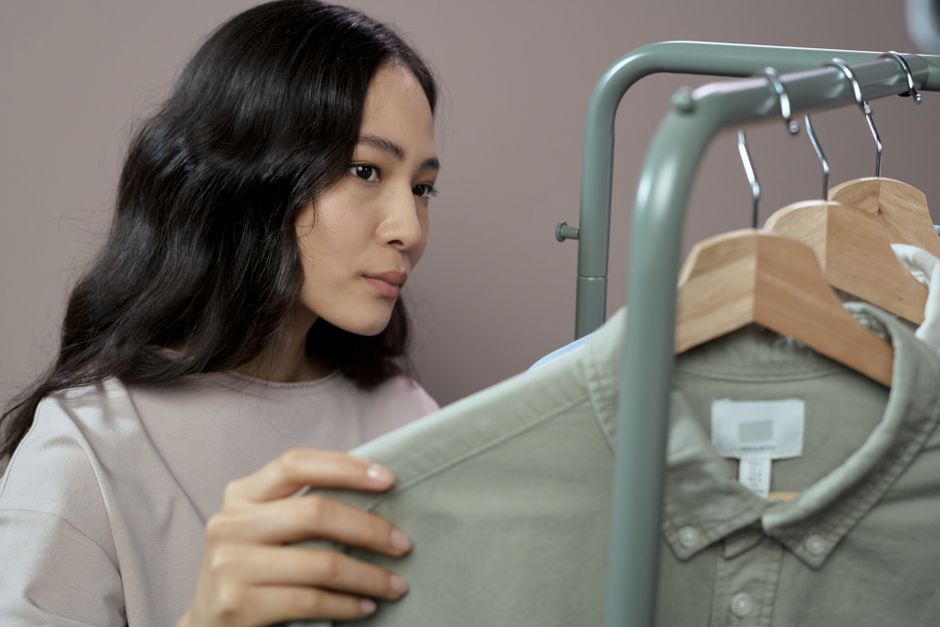
Fit is the strongest signal in an outfit because it controls the outline of the body. A shoulder seam should sit close to the end of your shoulder. A shirt should skim the torso without pulling across the chest. Trousers should sit securely at the waist and fall cleanly through the seat and thigh. These details matter more than a seasonal colour or a popular logo.
The one-change verdict
If you can make only one improvement, alter the garment that frames the largest part of your body. For many people, that means trouser length or jacket shoulders. A clean hem can make inexpensive trousers look deliberate, while a jacket with collapsing shoulders will still look wrong after dry cleaning. Do not size down simply to appear slimmer. Tight fabric creates horizontal lines, pulls buttons out of place and makes movement look uncomfortable. Do not size up to hide every area you dislike either. A better outfit gives the body some shape while leaving room to sit, walk and breathe.
The clear verdict is simple: choose a good fit before a fashionable detail. Trends change quickly, but balanced shoulders, usable ease and a clean hem keep working.
How Should You Balance Colour, Proportion and Formality?
Build the outfit from the largest blocks
Dress from the outside in. First check the relationship between the top half and bottom half, then look at colour, then add detail. A long oversized coat over very wide trousers creates a large, low silhouette. That can work, but it needs a visible structure underneath, such as a tucked shirt, cropped knit or defined waist. If every layer hangs at the same length, the body loses a clear centre.
A useful proportion guide is to divide the outfit into unequal sections. Try a shorter jacket with mid-rise trousers, or a longer shirt with a narrow skirt. Avoid placing every hem at the same point across the body. A COS merino crew-neck jumper, for example, has a clean, simple shape that can sit over a longer white shirt; the exposed shirt hem adds depth without needing another bright colour. The point is not to copy a brand outfit. It is to create a clear top, middle and bottom.
Use colour to control attention
Two neutrals and one accent colour are enough for most everyday outfits. Navy, cream and burgundy feel intentional. Black, grey and cobalt create stronger contrast. If the shoes, bag, belt and top all have different colours, the outfit starts to look assembled from separate decisions. Repeat one colour at least twice when possible. A brown belt can connect to brown loafers, while a red scarf can echo a small detail in a bag or knit.
Keep the dress level consistent
Formality is about more than price. Texture, shine, structure and footwear all contribute. A satin blouse, tailored trousers and polished leather shoes form a dressier group. A faded sweatshirt, cargo trousers and canvas trainers form a casual group. Combining them can work, but one item must bridge the gap. A soft blazer can connect a T-shirt to tailored trousers. Clean leather trainers can relax a suit. A formal silk tie cannot make distressed jeans suitable for a business meeting.
My strongest recommendation: decide the outfit’s dress level before choosing accessories. It prevents the common mistake of using jewellery, sunglasses or a designer bag to disguise mismatched basics.
Five Mistakes to Check Before Leaving Home
A five-minute outfit audit
- Check the shoulders. If a jacket seam drops far beyond the shoulder, the garment may be too large. If it pulls towards the neck, it may be too small.
- Check the longest line. Look for one intentional vertical line from coat to trouser or skirt. Random stopping points can make the outfit look shorter and busier.
- Check the shoes. Worn soles, dirty laces and heavy creasing are often more visible than a small stain on a top. Clean the shoes or choose another pair.
- Check the inside layer. A vest, bra strap, undershirt or sock should not create distracting lines unless the exposure is clearly part of the outfit.
- Check movement. Sit down, raise your arms and walk a few steps. If buttons pull, trousers slide or a skirt twists, the outfit is not ready for a full day.
When to leave the outfit alone
Do not keep adding pieces because the outfit feels too plain. Plain may mean balanced. A clean shirt, straight trousers and simple shoes can look stronger than a stack of belts, chains, hats and patterned layers. Stop when the main shape is clear and the eye has one obvious focal point.
These checks also reveal when not to buy. If the only way to make a garment work is to add three more items, it is probably the wrong purchase. Return it, tailor it or wear it in a simpler combination.
Style Mistakes Questions People Ask Before Dressing Better

Is wearing too many basics a style mistake?
No. Basics become dull when they have no contrast in shape, texture or proportion. A white T-shirt, straight denim and a wool overshirt can look considered if the fabrics and lengths differ. The mistake is buying several versions of the same thin, loose, mid-length item and expecting accessories to create interest.
Are designer logos always a problem?
No, but a logo should not be the outfit’s only point of interest. A small embroidered mark on a Polo Ralph Lauren Oxford shirt reads differently from a large graphic across the chest. If the logo is loud, keep the rest of the outfit quiet. If you want a low-effort polished look, a plain Arket overshirt or a simple Uniqlo knit gives you more room to use colour and texture.
Should casual shoes be worn with tailored clothes?
Yes, if the shoe has a clean shape and the tailoring is not too formal. Minimal leather trainers can work with relaxed trousers and an unstructured blazer. Running shoes with bright technical panels usually clash with sharp wool trousers because the materials and purpose are too far apart. For a balanced smart-casual outfit, choose one relaxed element and keep the other pieces controlled.
So, when you stand in front of the mirror asking why the outfit feels wrong, start with the outline. Correct the fit, remove one competing detail and match the dress level. The result will look more deliberate before you spend another pound on clothes.