
Cold-Weather Layering Without Bulk: Base to Outer
Why Cold-Weather Layers Feel Bulky
The fastest way to reduce bulk is to stop treating warmth as a contest between thick garments. Warm clothing works by trapping air, slowing heat loss, and blocking wind or moisture. A large sweater can trap plenty of air, but it also creates loose fabric at the shoulders, elbows, waist, and underarms. Add a heavy coat and the outfit becomes stiff before it becomes comfortable.
Warmth comes from trapped air, not maximum thickness
Each layer has a different job. The base layer manages sweat and keeps fabric close to the skin. The middle layer holds warm air around the torso. The outer layer blocks wind, rain, or snow. When one garment tries to perform all three jobs, it usually becomes thick, heavy, or poorly ventilated.
The goal is a thin base, a controlled amount of insulation, and an outer layer with enough room for movement. A close base layer works better than a loose cotton shirt because it does not bunch under the next layer. A medium mid layer often gives more usable warmth than two oversized sweaters. A wind-resistant shell can add more comfort than another fleece on a cold, exposed street.
Fit matters as much as fabric
Check the outfit while sitting, reaching forward, and lifting both arms. The base layer should touch the body without pulling across the chest. The mid layer should leave roughly 2 to 4 inches of room around the torso, depending on its loft. The coat should close without compressing the insulation. Compression creates cold spots, especially across the shoulders and upper back.
Keep the thinnest fabrics at the wrists, neck, and waist. Those areas are where layers overlap and create visible ridges. A smooth base, a clean mid layer, and one structured outer layer usually look slimmer than a stack of bulky knits.
Which Base Layer Works Best Under Winter Clothes?

The base layer should control moisture without adding unnecessary thickness. For most city wear, a lightweight or midweight layer is enough. Heavy thermal underwear makes sense for long periods outdoors, but it can feel hot on trains, in offices, or inside shops.
Base-layer comparison
| Base layer | Fabric and weight | Best use | Main tradeoff |
|---|---|---|---|
| Smartwool Classic Thermal Merino Base Layer Crew | 100% merino wool, 250 weight | Cold, dry days and low-to-medium activity | Warmer and less quick-drying than thin synthetics |
| Patagonia Capilene Midweight Crew | 100% recycled polyester, midweight knit | Walking, travel, and active commutes | Can hold odor sooner than merino |
| Uniqlo HEATTECH Ultra Warm Crew Neck | Brushed thermal blend, crew-neck design | Low-cost warmth for casual city wear | Less effective when damp during hard activity |
The clear pick for most wardrobes
For a single base layer that covers the widest range of winter outfits, the Patagonia Capilene Midweight Crew is the most practical choice. Its synthetic fabric dries faster than merino and usually slides under denim, wool trousers, or a fitted sweater without creating much friction. Choose the Smartwool Classic Thermal Merino 250 when warmth and odor control matter more than fast drying. Choose the Uniqlo HEATTECH Ultra Warm Crew Neck for low-output days when price and easy layering matter most.
Avoid cotton next to the skin in freezing weather. Cotton absorbs sweat and dries slowly, so the fabric can turn cold during a walk home. Also avoid wearing two thick base layers. The second layer often compresses the first, adds little warmth, and makes the coat fit badly.
How to Build Three Warm Layers Step by Step
A slim winter outfit needs a repeatable order. Use this sequence, then remove one layer when indoor heat makes the outfit too warm.
The layering sequence
- Start with a close base. Pick a long-sleeve layer that reaches the wrists and sits flat at the neck. The fabric should feel smooth under the next garment. For temperatures around 35 to 45°F, a lightweight or midweight base is usually enough.
- Add one insulating middle layer. Use fleece, wool, a fine-gauge knit, or a light synthetic jacket. Choose one main source of loft instead of stacking several thick tops. The mid layer should cover the lower back and stay inside the coat when you move.
- Control the high-draft areas. Close the neck, cover the wrists, and keep the waist protected. A scarf or neck gaiter can add comfort without adding torso bulk. Sleeves with thumb loops help stop cold air from entering when you reach forward.
- Finish with weather protection. Pick the outer layer based on the forecast. Wind needs a tightly woven shell. Rain needs a waterproof membrane or coated fabric. Dry cold allows more breathable insulation. The shell should close over the middle layer without flattening it.
- Test the outfit before leaving. Zip everything, sit down, bend your elbows, and walk for five minutes. If your shoulders pull or your arms feel trapped, remove thickness from the middle layer. If cold air enters at the neck or waist, fix that opening instead of adding another sweater.
The slim-fit rule
Use one fitted layer, one comfortable layer, and one protective layer. Three tight layers restrict movement. Three loose layers trap fabric but leave gaps for drafts. This middle-ground formula gives warmth, mobility, and a cleaner outline.
How to Choose an Outer Layer for Wind, Wet, and Dry Cold

Pick the outer layer for the weather you will face, not for the coldest temperature printed on a forecast. Dry, still cold favors loft. Windy cold favors a wind-resistant face fabric. Wet cold demands weather protection because damp insulation loses warmth and takes longer to recover.
For dry cold, use controlled insulation
The Patagonia Nano Puff Jacket uses 60-g PrimaLoft Gold Insulation Eco and a lightweight recycled nylon ripstop shell. It works well as a middle or outer layer for commuting because it adds warmth without the volume of a thick down coat. Its slim profile makes it easy to wear over a base layer and under a roomy shell. The tradeoff is clear: it is not a substitute for a waterproof rain shell in steady rain.
The Arc’teryx Atom Hoody uses Coreloft Compact 60 insulation and a lightweight 20D face fabric. It is a strong choice for active city walking because the side panels allow more movement and ventilation than a fully insulated coat. For standing outside in strong wind, the Atom needs a weather-resistant outer shell or a warmer coat. Its versatility is more valuable than maximum static warmth.
Common outer-layer mistakes
- Buying a coat that is too tight. A compressed mid layer loses loft, and the wearer often feels colder despite owning a warmer garment.
- Using a down or synthetic puffer in wet weather without protection. Insulation can absorb water or lose efficiency when the face fabric wets out.
- Choosing a heavy coat for every setting. A very warm coat can be uncomfortable on public transport and may cause sweating, which creates a chill outside.
- Ignoring the hood and collar. A good hood and a high collar can reduce heat loss around the head and neck without increasing torso thickness.
Do not buy a highly insulated outer layer if you spend most of winter moving between heated buildings. A lighter insulated jacket with a separate shell gives better control. Buy the heavier coat when you spend long periods standing still, commuting by bike in exposed wind, or working outdoors.
Cold-Weather Layering Questions That Change the Outfit
Should the middle layer be loose?
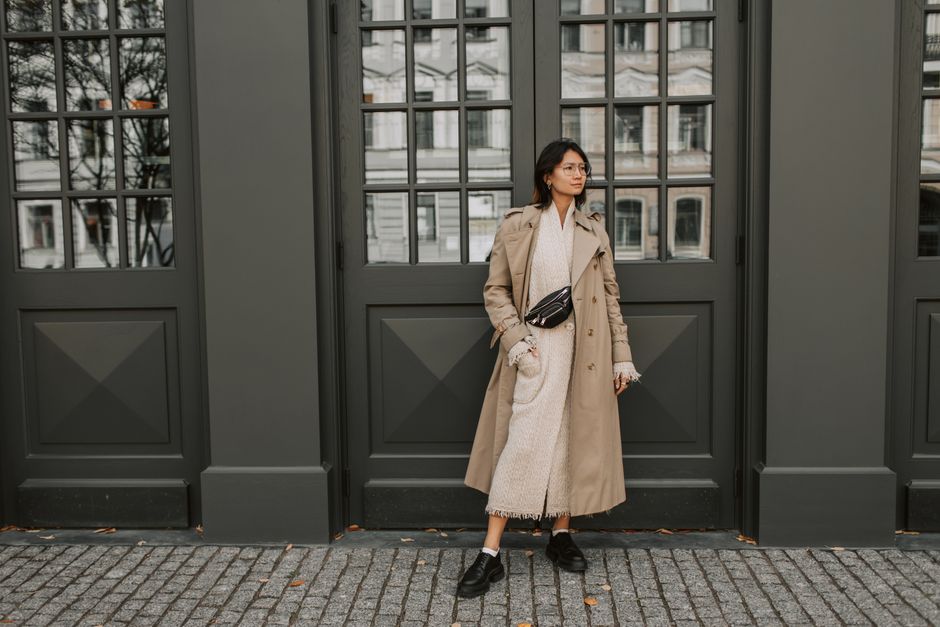
It should have room for air and movement, but it should not hang far from the body. A good mid layer leaves space around the chest and shoulder blades while staying close enough to fit inside the outer layer. If the fabric folds heavily under the arms, it is too large or too thick. If the coat pulls across the back, the mid layer is too small for that coat.
Is wool warmer than synthetic fabric?
Wool often feels warmer in a broad range of conditions and manages odor well. Synthetic fabric usually dries faster and handles repeated washing with less care. For a long, low-output day in dry weather, merino is the stronger choice. For active travel, exercise, or wet conditions, a synthetic base layer is more reliable. The best choice is the fabric that matches the moisture and activity level rather than the one with the warmest reputation.
What should be removed first indoors?
Remove the outer layer first, then open or remove the middle layer if needed. Keep the base layer on when possible because it protects the outfit from sweat and keeps the temperature change gradual. If you regularly feel overheated indoors, reduce the insulation in the middle layer instead of buying a larger coat. A thin base, one moderate mid layer, and a weather-ready shell gives the most control with the least bulk.